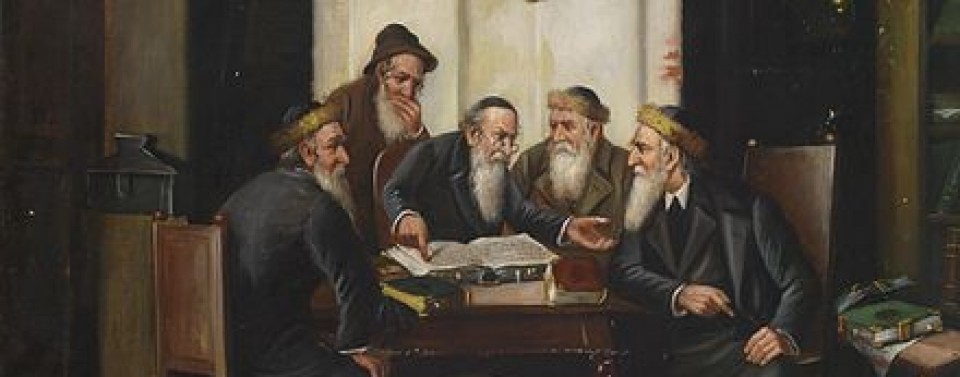
• About Today’s Rabbi

Today's Rabbi

~ …for you, a little wisdom!

Today's Rabbi

Category Archives: Uncategorized

Seeing Peace

29 Friday Jan 2016

Posted by joelaur in Contemporary Sages, Uncategorized

≈ Leave a comment

Tags

anger, Course In Miracles, forgiveness, peace, rage

“I could see peace instead of this.” – A Course in Miracles

word_peace_in_sand_187143

Following my cousin David’s death in a car crash caused by a drunk driver, my deep sadness was mixed with fiery rage. That drunken, speeding, SOB! That party boy! I stare at his Facebook page, at him smiling in front of the big Mercedes that killed David and his love Liz, and I am obsessed with this smiling hot shot, his sharp clothes, the young women he poses with, pictures of his Bloody Mary he’s calling “lunch” on his page. I am enraged, full of judgment, and it’s starting to obsess and eat me alive.

There is another way. When the Course in Miracles says I could see peace instead of  horror, anger rage, revenge, it offers me a way out of hell. Without denying the outrage and injustice of David’s death, I can channel my righteous action into anger, telling my friends never to drink and drive, donate to M.A.D.D., go for a run to get the energy moving in a positive direction. This is not forgive and forget. It is forgive and remember. Remember that people, all of us, are capable of mindless acts that can do irreparable harm. Remember, that there were times in my youth, when I drove after too many drinks. Times when I sped. Times when I sleepwalk through life, unawares.

Suddenly my anger gives way to deep sadness. I’m sorry this happened, to David, to Liz, even to young playboy Vladymyr in his Mercedes. He’s dead too, his young life extinguished. As I let the tears flow, I see a path out of hell. Channel the anger into right action. Let the grief have its way with me until I find release. Remember my cousin for his life, not just his death. Had I been offered him for 51 years with the understanding that he’d be taken away afterward, would I have signed the deal? Absolutely. His presence in my life has been huge blessing. Why let anger at his passing eat me alive and negate that?

I can see peace now, even through the tears. I can see the blessing that David has been to so many, see the needless loss that many have suffered, and live my life with an awareness that bad things can happen to good people; but if I’m on point, it can happen less. Just like David, I can bring some peace to this world. It eases the sting a little. I know it’s the right thing to do. Channel the anger into positive action, forgive, remember, and stay awake. In David’s name, I can make peace. It’s what he’d do.

What can you make peace with that is eating you?

~~~~~~~~~~~~~~~~~~~~~~~~~~~~~~~~~~~~~~~~~~~

A Course in Miracles is a book written and edited by Helen Schucman, with portions transcribed and edited by William Thetford, containing a self-study curriculum to bring about what it calls a “spiritual transformation”.

Joe Laur is a father, husband, artist, builder, naturalist, consultant, and EcoKosher mashgiach. He lives with his wife Sara in western Massachusetts, where he serves as head groundskeeper and resident singer songwriter. Send him your favorite teaching quote for commentary. He can be reached at joe.laur@joelaur.com.


Why Am I Here?

28 Thursday Jan 2016

Posted by joelaur in Mystic Voices, Uncategorized

≈ Leave a comment

Tags

Baal Shem Tov, David Laur, death, Joe Laur, life and death, understanding, Why Am I here?

“Now I know why I was created.” – the Ba’al Shem Tov, at the moment of his death.

12642464_10153176035831946_5053937030444434565_n

It was not my plan to get so intensely personal so soon into this new blog. But we plan, and G!D laughs, or sometimes, cries. My cousin (I nearly typed ‘brother’- that’s how close the cousins are in our family), David Laur z’l, passed away this morning, a few days after an horrific car crash that claimed two other lives, and left two others in critical condition.

David was not at fault; returning with his girlfriend from a planning meeting for a charity triathlon for the disabled, his car was struck head on by a drunk driver, traveling and passing at high speeds, who crossed the double yellow lines and ended at least three lives and irreparably damaged two others.

The brain screams “Why?”,  to G!D, to the sky, to no one in particular. Senseless destruction, good lives crushed right out of existence in twisted metal, ripples of suffering moving outward from the site and moment of the crash. At first deafening silence, then small soft voices begin to offer incomplete and only partially satisfying answers.

“Why?” is really the question, isn’t it? From 3 years olds paying the “Why” game to keep adults engaged, to our final rattling breath, “Why?” is the question, the alpha and omega. Why are we here? Why do you love me? Why don’t you love me? Why did this happen, and not that? Finally, “Why do I have to leave so soon and so suddenly?”

I don’t know what answer to his “Why?” the Ba’al Shem Tov received as he passed to the next world. But that his “Why?” was answered at all, brings some sort of comfort. Maybe it’s not futile after all. Maybe Meaning Triumphs! Maybe we get let in on the cosmic joke at the end. Maybe we look back on our lifepath, connect the dots, and finally understand. Maybe, as Rumi says, our lips close with a whimper HERE and open with a shout THERE!

Why, why, why? Like a sharp knife, a good question can carve out new answers every day. Ultimately, it’s not about the answer. It’s about those questions that take us to another place; a better, deeper, fuller state of being. The poet Rilke exhorts us to love the questions, to live the questions. G!D willing, we can live the questions into Infinite Answers. For David, for us all, may there be endless wondrous answers following our deepest questions.

Why are you here, now?

Rabbi Yisroel (Israel) ben Eliezer (born circa 1700, died 22 May 1760), often called Baal Shem Tov or Besht, was a Jewish mystical rabbi. He is considered to be the founder of Hasidic Judaism.

Joe Laur is a father, husband, artist, builder, naturalist, consultant, and EcoKosher mashgiach. He lives with his wife Sara in western Massachusetts, where he serves as head groundskeeper and resident singer songwriter. Send him your favorite teaching quote for commentary. He can be reached at joe.laur@joelaur.com.

Seeing Things As They Are

27 Wednesday Jan 2016

Posted by joelaur in Rabbinic Sages, Uncategorized

≈ Leave a comment

Tags

mental models, perspectives, seeing is believing, talmud, todays rabbi

“A man is shown in a dream only what is suggested by his own thoughts…”

–R. Samuel b. Nahmani

There’s a popular quote: “We do not see things as they are. We see things as we are.”— attributed to various sources, including the Talmud.  What Rabbi Nachmani really said in Talmud Tractate Berakhot (55b.) is above. But if what we see in our dreams is suggested by our thoughts, might not what we see, or choose not to see in our so called waking states also be influenced by what and who we are?

99782d4ce95c23e0b32b4c02dd19d9f7

The famous image above shows the profile of an old woman, or a young woman, depending how you look at it. Which one do you see? Can you see both? How we look at things depends on our life history, our culture, and our deep  belief systems called mental models. And when we have a deeply seated mental model, we tend to see life through that lens.

Imagine you see a sign that says, “Fine for Parking”. If you saw the world as a warm friendly place, you might park there, thinking that it was very thoughtful for someone to mark that parking space for you. If you were a more fearful person, you might avoid parking there, lest you get a ticket! Our worldview influences what we see and the meaning we make from it.

So it goes. What we tend to see outside ourselves reflects what is inside ourselves. And mere data has little effect on our mental models- we see what we see, and we won’t let mere facts get in the way. So we love one candidate and despise another, and cannot understand how our neighbor can vote for the other side. Seeing may be believing, but more often believing is seeing. We tend not to see things the way they are- we see them as we are.

How can you look at something with fresh eyes today, and challenge your own assumptions?

Samuel ben Nahmani  was a rabbi of the Talmud who lived in Israel and Babylon from the beginning of the 3rd century until the beginning of the 4th century. 

Joe Laur is a father, husband, artist, builder, naturalist, consultant, and EcoKosher mashgiach. He lives with his wife Sara in western Massachusetts, where he serves as head groundskeeper and resident singer songwriter. Send him your favorite teaching quote for commentary. He can be reached at joe.laur@joelaur.com.
The Bridge Over Fear

26 Tuesday Jan 2016

Posted by joelaur in Historic Voices, Uncategorized

≈ 2 Comments

Tags

facing fear, Joe Laur, narrow bridge, Nathan of Breslov, Reb Nachman of Bratslav

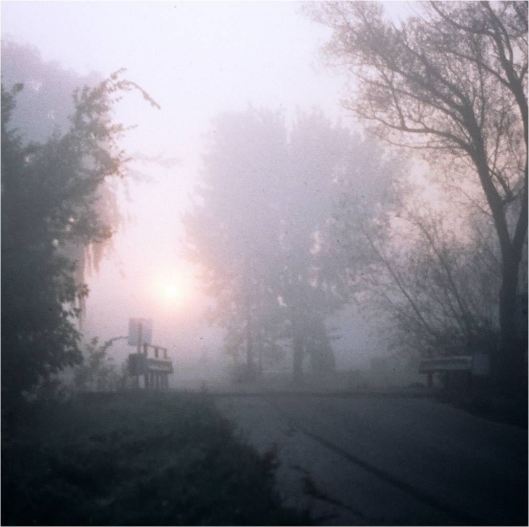
“The whole entire world is a very narrow bridge, the main thing is to be totally unafraid.”- Reb Nachman of Breslov

Narrow-bridge1

Life is a balancing act. The difference between health and happiness, sorrow and death, is a knife’s edge that know it or not, we walk every day. Life hangs on our next breath, the next heartbeat, a narrow temperature range, and a small set of conditions on Planet Earth that make human existence possible.

At any moment, life can end. We can slip off the “narrow bridge” that Reb Nachman refers to and plunge into eternity in a single misstep. But we cannot afford to live our lives in fear of that fall. It is going to come, inevitably, someday for all of us; the real question is, “How will I live right NOW, in whatever time I am given?” Will I live in terror at the prospect of future pain, suffering or death? Or will I grasp my “now”, and stride over the bridge of my life, over the gulf of fear, toward my best and highest vision and purpose? It’s choice we make every minute, every day.

The purpose of fear is awareness. Fear opens our eyes, pricks up our ears, readies our muscles for movement. Awareness is our friend, unconsciousness our enemy. Let’s embrace that awareness as Awe, not Fear, and stride out on the bridge over the span of our lives. Eternity awaits us all.

What do I need to be aware of to move through my life today?

Nachman of Breslov, also known as Reb Nachman of Bratslav, (April 4, 1772 – October 16, 1810), was the founder of the BreslovHasidic movement.

Rebbe Nachman, a great-grandson of the Baal Shem Tov, breathed new life into the Hasidic movement by combining the esoteric secrets of Judaism (the Kabbalah) with in-depth Torah scholarship. He attracted thousands of followers during his lifetime and his influence continues until today through many Hasidic movements such as Breslov Hasidism.[1] Rebbe Nachman’s religious philosophy revolved around closeness to God and speaking to God in normal conversation “as you would with a best friend.”

Joe Laur is a father, husband, artist, builder, naturalist, consultant, and EcoKosher mashgiach. He lives with his wife Sara in western Massachusetts, where he serves as head groundskeeper and resident singer songwriter. Send him your favorite teaching quote for commentary. He can be reached at joe.laur@joelaur.com.
Make Each Day Count

25 Monday Jan 2016

Posted by joelaur in Uncategorized, Wisdom from Psalms

≈ Leave a comment

Tags

heart of wisdom, number each day, psalms, Teach us to number or days, that we may gain a heart of wisdom, treasure each day, wisdom

“Teach us to number or days, that we may gain a heart of wisdom” -Psalm 90:12

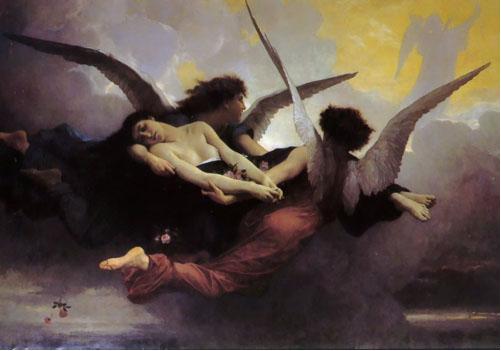
3 days til morning

My cousin David was in a serious auto collision a few years back. His girlfriend was killed outright, he lingered in critical condition for a few days before succumbing to his injuries. While praying for his  full healing, and after his death, I opened his Facebook page and looked at his photos. They were photos of happiness, of love, of achievement- a solid guy with a big heart and a level head, enjoying life with a woman he loves.

In an instant, all of that is disrupted.  A sudden swerve, a turn, a choice, a moment of neglect or distraction, and lives are changed forever, upended, broken, gone. A life will never be the same.

Isn’t that true in any instant? Every moment, every day is here and now, and in the next turning it’s then and there, gone forever. The Psalmist urges us to not only count/number/treasure each day, but promises that doing so will gain us a heart of wisdom. Not head of wisdom, but something deep, with sense and sensation, feeling, emotion. An appreciation of each  passing moment that never returns.

In this awareness, the immediacy of life, the preciousness of living, is ours to savor, roll around on our tongue, and swallow whole. It’s all we have really. Just moments to live. This moment, and this one and this one, until our moment comes. Living in the wisdom that each day is numbered, finite, to be treasured, makes even a lousy day a blessing. As the Talmudists say, “An hour of life is still life.”

How will you make today count?

Joe Laur is a father, husband, artist, builder, naturalist, consultant, and EcoKosher mashgiach. He lives with his wife Sara in western Massachusetts, where he serves as head groundskeeper and resident singer songwriter. Send him your favorite teaching quote for commentary. He can be reached at joe.laur@joelaur.com.
The State of Our Neighbor’s Soul

24 Sunday Jan 2016

Posted by joelaur in Historic Voices, Uncategorized

≈ Leave a comment

Tags

daily living, ethics, Israel Salanter, jewish ethics, love your neighbor, musar, mussar

“We spend our time worrying about our physical well being, and the state of our neighbor’s soul. Better we should spend our time worrying about our neighbor’s physical well being, and the state of our own soul.”

-Rabbi Israel Salanter

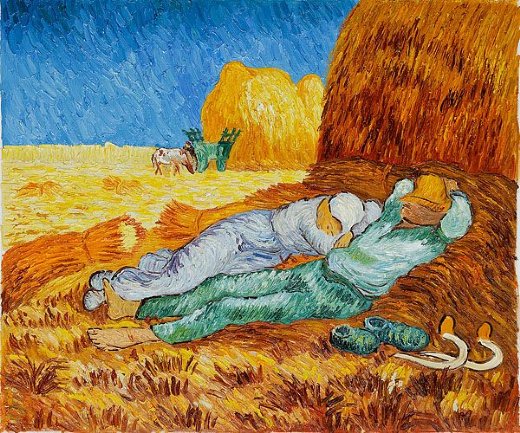
SoulCarriedtoHeaven

Soul carried to Heaven by William Bouguereau

This pithy statement from Rabbi Salanter needs little commentary. How often do we get our priorities confused, worrying about the truly unimportant things, and the things we have the least influence over?  Though closely related, in many ways  my own internal state is more important than my outer physical state, and in any case, I always have greater influence on my soul state than my physical condition. I may get sick, have a fall, go hungry, and certainly age and die. All of it is beyond my control in most cases. But my internal condition, regardless of external circumstances, is in my own hands. In any moment I can choose to be angry or  calm, agitated or at peace, even in spite of trying situations and times.

And as far as my neighbor goes, trying to “save her soul” is a fool’s errand. But I can easily make sure she has enough food to eat, clothes to wear, medicine when ill, and comfort and company in difficult straits. This is where the leverage is, my realm of influence. My internal condition, and my neighbor’s external condition, is where I can make a difference, every day, every week, every month, every year.

“Love your neighbor as yourself, I am G!D” is smack dab in the middle of the books of Moses, the Torah. I love the juxtaposition of the phrases- it’s like saying, “Take care of each other. I’m G!D. Any questions?”

How best today, can you care for your soul AND your neighbor’s well being?

-JL


Rabbi Yisroel ben Ze’ev Wolf Lipkin, also known as “Yisroel Salanter” or “Israel Salanter” (November 3, 1810, Zhagory – February 2, 1883, Königsberg), was the father of the Musar (ethical living) movement in  Judaism and a famed Rosh yeshiva and Talmudist.

Joe Laur is a father, husband, artist, builder, naturalist, consultant, and EcoKosher mashgiach. He lives with his wife Sara in western Massachusetts, where he serves as head groundskeeper and resident singer songwriter. Send him your favorite teaching quote for commentary. He can be reached at joe.laur@joelaur.com.

The Door Is Wide Open!

23 Saturday Jan 2016

Posted by joelaur in Mystic Voices, Uncategorized

≈ Leave a comment

Tags

Mystic Voices, renewal, rest, rumi, sabbath, shabbat

“Be empty of worrying.
Think of who created thought!

Why do you stay in prison
When the door is so wide open?”

–Rumi

Jalal ad-Din Muhammed Rumi was a 13th-century Persian poet, jurist, Islamic scholar, theologian, and Sufimystic. Rumi’s influence transcends national borders and ethnic divisions; people of all faiths and nations have greatly appreciated his spiritual legacy for the past seven centuries. His poems have been widely translated into many of the world’s languages and transposed into various formats. Rumi has been described as the “most popular poet” and the “best selling poet” in the United States.

Today is Shabbat, the Sabbath in English, a day to be rather than do, a day to bless and praise creation rather than labor at it, a day of rest and renewal. On a day like this, we can let go of our worries, just for one planetary turn; we can live moment to moment, we can be sane today even if our lives are crazy yesterday and tomorrow. Think of it as a long outbreath after a week of sucking it up!

vincent-van-gogh-noon-rest-from-work

Van Gogh, Noon Rest From Work

This quatrain of Rumi is especially perfect for today. Why worry? As Rabbi Zalman Schachter-Shalomi once said, “If worrying did any good, rich people would hire worriers!” Reflect on the Infinite Mind behind all thought. We often feel as though we are chained to our lives, our schedules, our jobs, our obligations. Take the radical act of a one day break from burdens, and instead, embrace response-ability, the ability to respond in each moment to what is before us. We are not imprisoned, or if we think we are, we can recognize that just for today, the door is only locked from our side of it!

In what ways can you free yourself to the pure joy of simply being today?


Joe Laur is a father, husband, artist, builder, naturalist, consultant, and EcoKosher mashgiach. He lives with his wife Sara in western Massachusetts, where he serves as head groundskeeper and resident singer songwriter. Send him your favorite teaching quote for commentary. He can be reached at joe.laur@joelaur.com.

Redeeming Captives

22 Friday Jan 2016

Posted by joelaur in Uncategorized

≈ Leave a comment

“Ransoming captives supersedes charity to the poor”- Maimonides (Moshe ben Maimon)

Rabbi Moshe ben Maimon (acronymed Rambam  for “Rabbeinu Moshe Ben Maimon”, and Latinized Moses Maimonides), was a preeminent medieval Sephardic Jewish philosopher and astronomer,and  became one of the most prolific and influential Torah scholars and physicians of the Middle Ages. He worked as a rabbi, physician, and philosopher in Morocco and Egypt.

The United States, a few years back, completed a prisoner swap with Iran, freeing 7 Iranians held in the US (mostly on charges of violating the trade embargo- no terrorists among them) in exchange for 4 Americans held by Iran on dubious spying and security charges.

The politics of this event aside, Maimonides and other Jewish thinkers put a high value on freeing captives. The Talmudic sages even said that we should redeem our teachers before our parents, even before the king! (Although, given that they were the community teachers,  this may have influenced their thinking!)

675px-Catene_e_catenacci

“Catene e catenacci” by Sandra Grampa – Own work. Licensed under CC BY-SA 3.0 via Wikimedia Commons – 

Failure to redeem captives in a timely way was seen as equivalent to spilling their blood, likely because it could lead to that either by their own hand or their captors. However, the price to be paid was proscribed and limited, so as not encourage more captives being taken, in an endless game of Red Rover.

Is freeing 4 captives in Iran a fair swap for 7 captives in the US? No one freed was held because they were dangerous actors, just businesspeople, journalists, students, and so on. The Talmud says that anyone who saves life, saves an entire world, and whoever takes a life destroys an entire world. Human lives are ascribed an infinite value. Let’s do the math: 4 times infinity = infinity, and  7 times infinity = infinity. So infinite worth was freed in exchange for infinite worth. Sounds like a fair deal, a just deal, and more freedom all around. The Course in Miracles teaches that the holiest places on earth are where an ancient enmity has become a current love. We are a long way from love with Iran, but I have to think that the world moved a bit toward the holy with the release of these 11 people, and a little more freedom and redemption resulted. And I think Maimonides would agree.

What is captive in yourself that longs to be redeemed?

Joe Laur is a father, husband, artist, builder, naturalist, consultant, and EcoKosher mashgiach. He lives with his wife Sara in western Massachusetts, where he serves as head groundskeeper and resident singer songwriter. Send him your favorite teaching quote for commentary. He can be reached at joe.laur@joelaur.com.

Repairing the World

21 Thursday Jan 2016

Posted by joelaur in Rabbinic Sages, Uncategorized

≈ Leave a comment

Tags

Rabbi Tarfon, social justice, tikkun olam

“You are not obligated to complete the work, but neither are you free to desist from it…”                   –Rabbi Tarfon, Pirkei Avot 2:16

Rabbi Tarfon was a member of the third generation of the Mishnah sages, who lived in the period between the destruction of the Second Temple (70 CE) and the fall of Betar (135 CE).

The Creation mythology of Genesis reveals G!D spending 6 days creating the world, in an evolving process of proclamation, separation, development, and emergence. In organizational consult terms, continuous improvement. And then G!D took the seventh day off.

It is taught that not only should we take every seventh day, Shabbat, off ourselves, but we too, should labor the other 6 to continue the work of bringing forth an emerging world, doing our best to improve it. This process is known in Hebrew as Tikkun Olam– healing, repairing, restoring and renewing the world.

world-in-hands

What is that work for us today? For many it is pursuit of healing of bodies and souls, justice for the long, old, and weak, and conservation and renewal of the planet we inhabit. Just as Providence brings forth grapes, grain, and maples, and we make wine, bread, and syrup, the work of tikkun is seen as partnering with the Divine to evolve a more perfect world. Visiting the sick and imprisoned; freeing captives; protecting children; physical, emotional, and spiritual healing; rebuilding communities and lives, all are examples of tikkun olam.

And as Rabbi Tarfon so succinctly puts it, we do not have to finish the work ourselves. Whew! How many of us have burned out or worn ourselves to a nub trying to do it all? Great News! We don’t have to!

But neither may we sit on our hands, or wring them sympathetically , while standing by doing nothing. We are tasked. If we see something, we ought not just to say something, but to DO something. The apostle James famously wrote that faith without works is dead.

We don’t need to take the world on our shoulders, Atlas is doing a fine job of that. But we can each lift up our bit of it, and in so doing, become partners with The One in bringing forth a world we’d want to live in.

What catches your attention today? What are you being called to  repair, heal, restore, renew?

Joe Laur is a father, husband, artist, builder, naturalist, consultant, and EcoKosher mashgiach. He lives with his wife Sara in western Massachusetts, where he serves as head groundskeeper and resident singer songwriter. Send him your favorite teaching quote for commentary. He can be reached at joe.laur@joelaur.com.

Perfection and Evil

20 Wednesday Jan 2016

Posted by joelaur in Contemporary Sages, Uncategorized

≈ Leave a comment

Tags

Irving Greenberg, peerfection, perfection and evil, tikkun olam

“Those who insist on perfection or nothing will surrender the world to evil…”

-Rabbi Irving Greenberg

Rabbi Irving Greenberg, also known as Yitz Greenberg, is a Modern Orthodox rabbi, Jewish-American scholar and author. He is known as a promoter of greater understanding between Judaism and Christianity.

I only spent a few hours one weekend studying with Rabbi Greenberg, but the teaching above was a major takeaway. I once had a man come up to me and tell me that I didn’t care about the environment because I wore a watch with a battery instead of a windup one. Never mind that I run my house on solar power, compost everything, recycle the rest, drive an electric car and work with major corporations on sustainability issues, I was less than perfect, and therefore no good.

perfection.jpg

Well, I’m guilty of that charge of lack of perfection. While I’m always striving for a positive impact on the world, I leave a few scars now and then. I am far from the ideal. But the point is to always make the effort, however big or small, to move the needle in the right direction. One small course correction can send us to an entirely different destination. And giving up ensures that I won’t have much of an impact on the things I care most about.  I’m reminded of this lesson time and again in raising children. While the good may be the enemy of the perfect, insistence on perfection may destroy the good.

Let’s not let ourselves off the hook, but let’s not hang ourselves on the hook, either! We were born to be real, not perfect.

What imperfect good thing can you begin today, and build upon tomorrow and the days after that?


Joe Laur is a father, husband, artist, builder, naturalist, consultant, and EcoKosher mashgiach. He lives with his wife Sara in western Massachusetts, where he serves as head groundskeeper and resident singer songwriter. Send him your favorite teaching quote for commentary. He can be reached at joe.laur@joelaur.com.

← Older posts
Newer posts →

Recent Comments

Tim Laur's avatarTim Laur on The Danger of Being Certa…
joelaur's avatarjoelaur on The Danger of Being Certa…
Tim Laur's avatarTim Laur on The Danger of Being Certa…
AJ's avatarAJ on The Danger of Being Certa…
Elisheva's avatarElisheva on The Bridge Over Fear

Author

  • joelaur's avatar joelaur
    • What We Don’t Know CAN Hurt Us!
    • The Danger of Being Certain
    • The Soul’s Long Journey
    • Acting Locally and Cosmically
    • The Fullness of the Earth
    • The Enemy is Fear
    • Running Against The Wind
    • Friendship as Food
    • No Place Like Home
    • Not The End Of The World

Blog at WordPress.com.

  • Subscribe Subscribed
    • Today's Rabbi
    • Already have a WordPress.com account? Log in now.
    • Today's Rabbi
    • Subscribe Subscribed
    • Sign up
    • Log in
    • Report this content
    • View site in Reader
    • Manage subscriptions
    • Collapse this bar
 

Loading Comments...