• About Today’s Rabbi

Today's Rabbi

~ …for you, a little wisdom!

Today's Rabbi

Tag Archives: todays rabbi

One Water, Many Wells

02 Saturday Apr 2016

Posted by joelaur in Historic Voices, Uncategorized

≈ Leave a comment

Tags

charity, deep ecumenism, interfaith dialogue, Joe Laur, Rashi, Shlomo Carlebach, todays rabbi, wisdom

“Divided as we may be by religion, we are united by charity.”

-Rashi
beach-14119
Rabbi Shlomo Carlebach, of blessed memory, was at an ecumenical gathering where someone commented that all faiths are headed to the same place, just by different roads. He begged to differ. “We are all on the same road,” he said, “we are just wearing different shoes!”
The word charity traces its origins back to the Latin word caritas, originally  meaning preciousness, dearness, high price. From this, in Christian theology, caritas became the standard Latin translation for the Greek word Αγάπη, meaning an unconditional love for others. It is this latter sense that Rashi would have understood the word, in French,  charité.
Rashi is saying something very simple here- that we may be divided by custom, belief or theology, but when we get to the core of every religion or spiritual path, we find a common theme- unconditional love for others. This is the “water of life” that flows in every religious well. The wells may differ in size, shape, depth or location, but they all tap into the same groundwater. No matter your faith of origin or adoption, you can jump right in – the water’s fine!
How can you “share the water” with someone of a different “well” today?
~~~~~~~~~~~~~~~~~~~~~~~~~~~~~~~~~~~~~~~~~~~~~~~~~~~~~~~~~~~~~~~~~

Shlomo Yitzchaki( 22 February 1040 – 13 July 1105), generally known by the acronym Rashi (RAbbi SHlomo Itzhaki), was a medieval French rabbi and author of a comprehensive commentary on the Talmud and commentary on the Tanakh (Hebrew Bible). Acclaimed for his ability to present the basic meaning of the text in a concise and lucid fashion, Rashi appeals to both learned scholars and beginning students, and his works remain a centerpiece of contemporary Jewish study. His commentary on the Talmud has been included in every edition of the Talmud since its first printing by Daniel Bomberg in the 1520s. His commentary on Tanach—especially on the Chumash (“Five Books of Moses”)—is an indispensable aid to students of all levels. The latter commentary alone serves as the basis for more than 300 “supercommentaries” which analyze Rashi’s choice of language and citations, penned by some of the greatest names in rabbinic literature.

Joe Laur is a father, husband, naturalist, executive, consultant, and a lowly rabbinic student. Send him your favorite teaching quote for commentary. He can be reached at joe.laur@godsdog.net.

Goldilocks Spirituality

01 Friday Apr 2016

Posted by joelaur in Historic Voices, Uncategorized

≈ Leave a comment

Tags

Goldilocks, Israel Salanter, Joe Laur, spiritual growth, spirituality, The Three Bears, todays rabbi

“Spirituality is like a bird: If you hold it too closely, it chokes, And if you hold it too loosely, it escapes.”

-Rabbi Israel Salanter
What_happened_then_stories_(1918)_(14752542262)
Goldilocks, besides a penchant for home invasion, had another enduring quality- being able to find the sweet spot between too hard and too soft, too hot and too cold, too high and too low. She found that which was “just right”. The Goldilocks Principle.
Nowhere is this principle more important to apply than in our spiritual life. As Reb Salanter says, held too close, our spirituality can choke us. Not held tightly enough, we may lose it. Many spiritual texts, like the Torah, can be likened to a fire. Taken too literally or held too tightly, it can burn and consume us. But take it away and we freeze in the dark. So we build a container around the fire- a stove or fireplace, where we can enjoy the fire and benefit from the heat and light it gives without burning down the house. We can tend it, wonder at it, share the warmth and atmosphere, cook nourishing meals over it.
Salanter suggests we approach our spirituality like Goldilocks: Not too hot, not too cold, not too hard, not too soft, just right. Don’t let ourselves off the hook, but don’t hang ourselves on the hook either.
How are you holding your spiritual life today, Goldilocks?

~~~~~~~~~~~~~~~~~~~~~~~~~~~~~~~~~~~~~~~~~~~~~~~~~~~~~~~~~~~~~~~~~~~~~

Rabbi Yisroel ben Ze’ev Wolf Lipkin, also known as “Yisroel Salanter” or “Israel Salanter” (November 3, 1810, Zhagory – February 2, 1883, Königsberg), was the father of the Musar (ethical living) movement in  Judaism and a famed Rosh yeshiva and Talmudist.

Joe Laur is a father, husband, artist, builder, naturalist, consultant, and EcoKosher mashgiach. He lives with his wife Sara in western Massachusetts, where he serves as head groundskeeper and resident singer songwriter. Send him your favorite teaching quote for commentary. He can be reached at joe.laur@joelaur.com.

Lying To Make Peace

31 Thursday Mar 2016

Posted by joelaur in Rabbinic Sages, Uncategorized

≈ Leave a comment

Tags

Joe Laur, Judah the Prince, lies, lying, peace, shalom, todays rabbi, Yehuda Ha-Nasi

“All lies are forbidden unless they are spoken for the sake of making peace. “

-Rabbi Yehuda Ha-Nasi, Baraita Perek Ha-Shalom

crossed-fingers-363478_1280

Lying is bad. We’ve been taught that from an early age. “Whatever you do, don’t like to me!” is a refrain of parents and lovers alike. It’s right there in the 10 Commandments, after all- Do Not Bear False Witness Against Thy Neighbor!

It seems there is one exception. We may like when it is for the sake of making peace between one person and another. Now, don’t take this as an excuse to lie to your spouse the next time you come home intoxicated at 4 in the morning. It’s not intended to get you off the hook for your own shortcomings.

The point being made here is that peace between people is so important that a departure from the strict truth is permitted if it will preserve or bring peace about. It’s about saving lives and restoring love.

Two friends, years back, had a bitter quarrel, and refused to speak to each other for months. A third friend went to each of them separately, and told each of them that the other was really sorry and wanted to make peace, but was too shy or ashamed to do so or even acknowledge their intentions, thinking the other would never forgive them.  Of course, this softened the hearts of each of them, and each thinking that the other was the true initiator, repaired their relationship.  A politician who tells a lie that prevents a war is a hero. Preserving life trumps a foolish insistence on perfect honesty. But it is a narrow gate to pass through, and not to be done lightly.

Is there a place in your life today where you struggle between perfect peace and perfect honesty?

~~~~~~~~~~~~~~~~~~~~~~~~~~~~~~~~~~~~~~~~~~~~~~~~~~~~~~~~~~~~~~~~~~~~~~~~

Judah the Prince (Hebrew Yehudah HaNasi) or Judah I, was a 2nd-century CE rabbi and chief redactor and editor of the Mishnah. He was a key leader of the Jewish community during the Roman occupation of Judea. According to the Talmud he was of the royal line of King David, hence the title nasi, meaning prince. Judah died on 15 Kislev around 217 CE.

Baraita (Aramaic for “external” or “outside”) designates a tradition in the Jewish oral law not incorporated in the Mishnah. Perek Ha-Shalom means “Chapter of Peace.”

Joe Laur is a father, husband, naturalist, executive, consultant, and a lowly rabbinic student. Send him your favorite teaching quote for commentary. He can be reached at joe.laur@godsdog.net.

Forgiving Ourselves And Others

30 Wednesday Mar 2016

Posted by joelaur in Contemporary Sages, Uncategorized

≈ Leave a comment

Tags

forgiveness, forgiving, Joe Laur, Patty Duke, self love, todays rabbi


“It’s toughest to forgive ourselves. So it’s probably best to start with other people. It’s almost like peeling an onion. Layer by layer, forgiving others, you really do get to the point where you can forgive yourself.”

-Patty Duke

800px-Forgiveness_0001

Forgiveness can be tough to do, and forgiving ourselves may be the toughest slog of all. One of the difficulties is that often we aren’t aware that we are holding ourselves to blame in the first place. Our self blame may be hidden, out of sight, “in shadow” as the Jungians  put it. Even once we have surfaced our own self condemnation, it can still be tough to forgive ourselves. We often hold ourselves to higher standard than we do others. “I should have known better,” or “There’s no excuse for what I did!” are common internal refrains.

It’s time to give ourselves a break. We are just as frail, prone to error, and worthy of forgiveness as anyone else. In fact, to fail to forgive ourselves may be a kind of egoism- that we are such a bad person, so unworthy, nothing in the world can redeem us! Aren’t we special!

What nonsense. The core of the Torah, the Gospels, the Quran and most spiritual texts is to “love our neighbor as ourselves.” Not more, not less. Indeed, to love our neighbor we have to love ourselves. And if we don’t forgive, how can we love? We all mess up. We all need, and deserve a second chance. And a third, fourth, seventh, fifteenth, etc.! If we are created in G!D’s image, and Divine Love is boundless, can’t we channel some of that boundless love and forgiveness for ourselves? It’s worth a shot. We can at least forgive ourselves for trying…

What will you forgive yourself for today?

~~~~~~~~~~~~~~~~~~~~~~~~~~~~~~~~~~~~~~~~~~~~~~~~~~~~~~~~~~~~~~~~~~~~~~

Anna Marie “Patty” Duke (December 14, 1946 – March 29, 2016) was an American actress of stage, film, and television. She first became known as a teen star, winning an Academy Award for Best Supporting Actress at age 16 for her role as Helen Keller in The Miracle Worker (1962), a role which she had originated on Broadway. The following year she was given her own show, The Patty Duke Show, in which she played “identical cousins”; she later progressed to more mature roles such as that of Neely O’Hara in the film Valley of the Dolls (1967). Over the course of her career, she received ten Emmy Award nominations and three Emmy Awards, and two Golden Globe Awards

Joe Laur is a father, husband, naturalist, executive, consultant, and a lowly rabbinic student. Send him your favorite teaching quote for commentary. He can be reached at joe.laur@godsdog.net.

What Prayer Changes

29 Tuesday Mar 2016

Posted by joelaur in Contemporary Sages, Uncategorized

≈ Leave a comment

Tags

C.S. Lewis, change, Joe Laur, prayer, todays rabbi

“I pray because I can’t help myself. I pray because I’m helpless. I pray because the need flows out of me all the time- waking and sleeping. It doesn’t change God- it changes me.”

-C.S. Lewis

kid-1077793_1920

It’s fools game to pray expecting a particular outcome. Whether G!D hears prayer or not, exists or not, Divine Will or the quantum foam may shape a different outcome. But I find prayer essential.

First, as C.S. Lewis famously writes, prayer changes the one praying. Charity starts at home and so does change. To clear the mind, the heart, the soul; to cry out from an empty place, or an angry place, or a joyful place changes the one crying out. I always have a different quality of day when I take the time to pray early and often. It resets my hard drive and refocuses my whole being, it seems.

We are all enmeshed in a global system of biological and psychological and likely spiritual connection. As Dr. Martin Luther King wrote from his Birmingham jail cell: “What affects one directly, affect all indirectly.” No one is an island, so if I improve my physical, or mental, or emotional, or spiritual state, it send out ripples and dances with connections seen and unseen. Who know where it goes and who it impacts?

So if prayer changes me, it almost certainly changes the world. I don’t get to control the exact direction of the change, any more than I do when I let a trickle of water flow down a hill. But I can exert influence on the world by changing myself. Pray locally, change globally!

What change in yourself, in the world, do you want to pray for today?

~~~~~~~~~~~~~~~~~~~~~~~~~~~~~~~~~~~~~~~~~~~~~~~~~~~~~~~~~~~~~~~~~~~~

Clive Staples Lewis (29 November 1898 – 22 November 1963) was a British novelist, poet, academic, medievalist, literary critic, essayist, lay theologian, broadcaster, lecturer, and Christian apologist. He held academic positions at both Oxford University, 1925–54, and Cambridge University  1954–63. He is best known for his fictional work, especially The Screwtape Letters, The Chronicles of Narnia, and The Space Trilogy, and for his non-fiction Christian apologetics, such as Mere Christianity, Miracles, and The Problem of Pain.

Joe Laur is a father, husband, naturalist, executive, consultant, and a lowly rabbinic student. Send him your favorite teaching quote for commentary. He can be reached at joe.laur@godsdog.net.

Seek The Truth, Avoid Those Who Find It

28 Monday Mar 2016

Posted by joelaur in Historic Voices, Uncategorized

≈ 1 Comment

Tags

Joe Laur, quest for truth, Solomon ibn Gabirol, todays rabbi, truth, truth seeking, wisdom

“People are only wise when they are searching for wisdom; when they feel they have achieved it completely, they are fools.”

-Solomon ibn Gabirol

fortune-cookie-1192836_1920

One of my friends and mentors used to warn me, “Joe, stay close to those seeking the Truth and far away from those who’ve found it.” His implication was that truth is too vast to be fixed to one thing, one place, one time. Therefore it’s always possible to seek it, but if we’ve found The One And Only Truth, we are probably missing something. Like sunlight, our paths can be illuminated by it, but we cannot hold it in our grasp.

People often criticize spiritual texts, especially the Bible, for their inconsistencies. Others hold every jot and tittle to be literally true. Both, in my opinion, miss the point. Like the Zen koan about the finger pointing at the moon, once the moon is seen the finger is no longer needed. So it is with sacred texts, rituals, customs, even wisdom. They point toward that which  can never be fully grasped, fully understood, fully grasped in our hands or our minds. It can only be experienced in this moment, and the next moment and the next. And they are only true for the moments in which they are true.

Nothing in the universe is fixed or constant- not the celestial orbs, not sunlight or moonlight, not the winds, tides, seasons, or the continents. Love waxes and wanes even in the most constant relationships, feelings shift; on some days grace fills us to overflowing and on others it is unconsolably absent. The only constancy is flux. So too with Wisdom and Truth.

So to try to grasp Truth or Wisdom as a singular thing is a fool’s mistake. Rather it is a journey,  a river flowing through our lives, a sunbeam illuminating our way. It can not be held in our hand anymore than Love can. Like G!D, Truth is a essentially a verb, not a noun. Wisdom is a path. We can walk in it, but never really possess it. And that’s the Truth! 🙂

What Truth or Wisdom are you seeking today? What Truth or Wisdom is seeking you?

~~~~~~~~~~~~~~~~~~~~~~~~~~~~~~~~~~~~~~~~~~~~~~~~~~~~~~~~~~~~~~~~~

Solomon ibn Gabirol (alt. Solomon ben Judah), was an 11th-century Andalusian poet and Jewish philosopher with a Neo-Platonic bent. He published over a hundred poems, as well as works of biblical exegesis, philosophy, ethics, and satire.

In the 19th century it was discovered that medieval translators had Latinised Gabirol’s name to Avicebron and had translated his work on Jewish Neo-Platonic philosophy into a Latin form that had in the intervening centuries been highly regarded as a work of Islamic or Christian scholarship. As such, Ibn Gabirol is well known in the history of philosophy for the doctrine that all things, including soul and intellect, are composed of matter and form, and for his emphasis on Divine Will.

Joe Laur is a father, husband, naturalist, executive, consultant, and a lowly rabbinic student. Send him your favorite teaching quote for commentary. He can be reached at joe.laur@godsdog.net.

Getting Started is Tough!

27 Sunday Mar 2016

Posted by joelaur in Rabbinic Sages, Uncategorized

≈ Leave a comment

Tags

beginnings, birth, challanges, difficulties, Genesis, Ishmael ben Elisha, Joe Laur, Mishnah, struggle, talmud, talmudic sages, talmudic wisdom, todays rabbi

“All Beginnings are Difficult”

-Ishmael ben Elisha

desert-tortoise-987972

The Chinese philosopher Laozi famously wrote that the journey of a thousand miles begins with a single step. But sometimes that first step- oy!

Take getting out of bed in the morning, for example. It can be the toughest step we take all day. We want to go back to sleep, remain cocooned in our bedding, stay horizontal. To confront gravity head on and stand upright is an audacious challenge! But we must do it to start the day.

The steepest learning curve is usually at the beginning, especially in new endeavors. I’m in the midst of starting a beverage business, something I’ve never done before. Sure, I have a great recipe. But bottling, pasteurizing, distribution, suppliers, price changes, selling, branding, marketing- the list goes on. Once I’ve produced the first batch, and have the systems in place to do the next one-it will be easier. I trust there’s a plateau, at least for a bit, on top of the steep turning curve.  Births are messy, often painful, usually a struggle. But without birth, no life. Getting out of the gate may be tough. But who can live their life always behind the gate?

What do you want to begin today?

~~~~~~~~~~~~~~~~~~~~~~~~~~~~~~~~~~~~~~~~~~~~~~~~~~~~~~~~~~~~~~~~~~~~~

Rabbi Ishmael “Ba’al HaBaraita” or Ishmael ben Elisha (90-135 CE) was a Tanna of the 1st and 2nd centuries (third tannaitic generation). A Tanna (plural, Tannaim) is a rabbinic sage whose views are recorded in the Mishnah.

Joe Laur is a father, husband, naturalist, executive, consultant, and a lowly rabbinic student. Send him your favorite teaching quote for commentary. He can be reached at joe.laur@godsdog.net.

Make Your Teachers Miserable!

26 Saturday Mar 2016

Posted by joelaur in Contemporary Sages, Uncategorized

≈ Leave a comment

Tags

arthur Kurzweil, god wrestling, Israel, Jacob, Joe Laur, Moses, Rabbi Adin Steinsaltz, talmud, talmudic wisdom, teachers, todays rabbi, wisdom

“Make the lives of your teachers as miserable as possible”

-Rabbi Adin Steinsaltz

study-for-jacob-wrestling-the-angel-1876-lc3a9on-joseph-florentine-bonnat-detail

My teacher Arthur Kurzweil, who used to drive Rabbi Steinsaltz whenever he came to the U.S., recounts a talk the Talmud scholar gave at a religious high school in his book, On the Road with Rabbi Steinsaltz. “He said, ‘Look, I don’t know that much about many things, but I know a little bit about Torah study. Make the lives of your Torah teachers as miserable as you can. Try to trip them up and find contradictions in what they say. Ask them the most difficult questions you can think of.’ When he was leaving the principal got up and told the students, ‘Don’t take him too literally.’ At which point, Steinsaltz goes and takes the microphone back and says, ‘My message to you today is: Make the lives of your teachers as miserable as you possibly can.’ And then he walked off the stage.”

Rumi teaches us to follow a “severe teacher” who will lead us into open spaces, but a student who makes the teacher suffer?  I think what Rabbi Steinsaltz means to teach is that we should squeeze everything we can from our teachers, make them think with us, work hard for us, wrestle with us, so we can move as far along on our path as is humanly possible.

The greatest of teachers, Moses, is a prime example of this. Had the Hebrew people not resisted, questioned, whined, complained and balked at nearly everything like stubborn teenagers, would Moses have risen to the level of leader he did? Would the slave mentality have been bred out of the nation without the struggle, like the struggle that strengthens a muscle?

Or Jacob, who through wrestling with the “man”  in the dark, and refusing to let go until he was blessed by the encounter, transformed into Israel- the Godwrestler. As student wrestles with teacher, perhaps both can wrestle into a larger truth than they would have otherwise discovered.

What “teacher” do you need to wrestle with today, to get the most from the encounter?

~~~~~~~~~~~~~~~~~~~~~~~~~~~~~~~~~~~~~~~~~~~~~~~~~~~~~~~~~~~~~~~~

Rabbi Adin Steinsaltz (born 1937) is a teacher, philosopher, social critic, and spiritual mentor, who has been hailed by Time magazine as a “once-in-a-millennium scholar”. He has devoted his life to making the Talmud accessible to all Jews. Originally published in modern Hebrew, with a running commentary to facilitate learning, his Steinsaltz edition of the Talmud has also been translated into English, French, Russian and Spanish.


Joe Laur is a father, husband, naturalist, executive, consultant, and a lowly rabbinic student. Send him your favorite teaching quote for commentary. He can be reached at joe.laur@godsdog.net.

Repeating the Past

25 Friday Mar 2016

Posted by joelaur in Contemporary Sages, Uncategorized

≈ Leave a comment

Tags

George Bernard Shaw, Joe Laur, Rabbi Arthur Waskow, redemption, repentance, return, Saint joan, todays rabbi, tshuvah

“Must then a Christ perish in torment in every age to save those that have no imagination?”

-George Bernard Shaw, “Saint Joan”
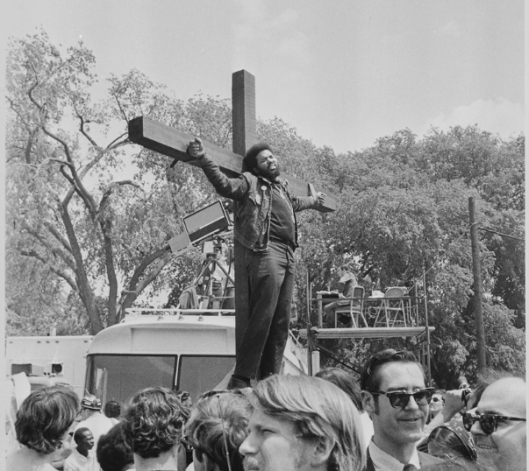
Screen Shot 2016-03-25 at 9.20.30 AM

My friend and teacher Rabbi Arthur Waskow posted a brilliant piece today on his Shalom Center website. Echoing the words above of Bernard Shaw’s repentant judge watching Joan of Arc burn at the stake, he links the question to various spiritual and moral crises of the ages:

“Must Rabbi Akiba’s body be torn by iron rakes in every generation because some of us lack imagination?

Must the Six Million be gassed to death in every generation because some of us lack not imagination of the horror, but compassion for the “Other” who is seen as not really human?

Must 29 Muslims be machine-gunned at prayer in the Tomb of Abraham because some of us are filled with fear, contempt, and hatred?  -– and must their deaths be renewed in every generation, as when  the Dawabsheh family in Palestine were burned alive in their own home? 

Must 30 Jews in the midst of celebrating Passover be blown to shreds in every generation because some of us are filled with fear, contempt, and hatred?  

 Must Martin Luther King and Michael Schwerner and Andrew Goodman and James Cheney  be murdered in every generation because some of us become addicted to their own power and protect it with their cruelty?

Must Cardinal Romero be murdered as he chanted the Mass and Jean Donovan, Maura Clarke, and four other Catholic lay religious sisters be raped and murdered in every generation because their work for the poor threatened the Salvadoran government?  

Must Emmett Till be lynched and Eric Garner be choked to death in every generation because Black lives don’t matter? 

Must thousands die in the most powerful tornado ever recorded because some of us would burn the Earth to make a super-profit – and because some of us lack the imagination to see our planet choking, hear it wailing, ‘I can’t breathe!'”

Reb Arthur and Bernard Shaw are proof that prophecy continues in every generation, and we either hear the voice of our prophets and return to a path of wholeness, or as generations have before us, suffer the consequences of continual fragmentation.

As over a billion Christians on Good Friday recall and honor the story of a crucifixion 2 millennia ago, we can all ask ourselves Shaw’s question. Can we remember the lessons of the past, in our personal lives, in our community life, in our planetary future, or must we keep repeating them? If we can learn the teachings and walk a different path, then true redemption can occur, and the crucifixions can end.

What painful lesson do you need to remember and redeem today, so as not to repeat it?

~~~~~~~~~~~~~~~~~~~~~~~~~~~~~~~~~~~~~~~~~~~~~~~~~~~~~~~~~~~~~~~~~~~~

George Bernard Shaw (26 July 1856 – 2 November 1950), known at his insistence simply as Bernard Shaw, was an Irish playwright, critic and polemicist whose influence on Western theatre, culture and politics extended from the 1880s to his death and beyond. He wrote more than sixty plays, including major works such as Man and Superman (1902), Pygmalion(1912) and Saint Joan (1923). With a range incorporating both contemporary satire and historical allegory, Shaw became the leading dramatist of his generation, and in 1925 was awarded the Nobel Prize in Literature.

Joe Laur is a father, husband, naturalist, executive, consultant, and a lowly rabbinic student. Send him your favorite teaching quote for commentary. He can be reached at joe.laur@godsdog.net.
A Day to Live

24 Thursday Mar 2016

Posted by joelaur in Contemporary Sages, Uncategorized

≈ Leave a comment

Tags

Joe Laur, last day of your life, life and death, moments to live, todays rabbi, tomorrow, wisdom

“Two questions to consider: 1. If you had only a day to live, who would you be with and what would you tell them? 2. What are you waiting for?”

-Anonymous

dawn-1226016_1920

I was just headed to dinner at a retreat I was leading when I checked my personal voice messages. The first was from a woman I knew, telling me in tears that a mutual friend we both worked closely with, Ron, had been murdered. In shock, I called my office voice mail immediately, expecting other colleagues to be calling me upon hearing the news.

The first voice mail on that phone was from Ron. He had called me just a couple of hours before being shot to death. His voice was light and breezy, he made a few remarks about a project we were working on together, and then said 3 words I’ve never forgotten: “Call me tomorrow.”

There I was, just minutes after learning of his death, hearing his voice confidently plan a tomorrow that would never come for him. I’ve never taken tomorrow for granted since that day.

We talk about and plan for tomorrow as if it were in our shirt pocket. But one day the shirt will be ripped off, the pocket torn open, and there will be no more tomorrows. It’s not morbid, just data. Not knowing when that day will come means we may want to have our affairs in order, at least on the emotional and spiritual level, today.

The two questions above really help to focus what and who is important to us. Once we know who we want to spend our time with and what we want to tell them, why wait? For the last day? No telling when that day might come, and it may be sooner than we think.

Who do you want to be with today, and what do you want to tell them?

~~~~~~~~~~~~~~~~~~~~~~~~~~~~~~~~~~~~~~~~~~~~~~~~~~~~~~~~~~~~~~

Joe Laur is a father, husband, naturalist, executive, consultant, and a lowly rabbinic student. He can be reached at joe.laur@godsdog.net.

← Older posts
Newer posts →

Recent Comments

Tim Laur's avatarTim Laur on The Danger of Being Certa…
joelaur's avatarjoelaur on The Danger of Being Certa…
Tim Laur's avatarTim Laur on The Danger of Being Certa…
AJ's avatarAJ on The Danger of Being Certa…
Elisheva's avatarElisheva on The Bridge Over Fear

Author

  • joelaur's avatar joelaur
    • What We Don’t Know CAN Hurt Us!
    • The Danger of Being Certain
    • The Soul’s Long Journey
    • Acting Locally and Cosmically
    • The Fullness of the Earth
    • The Enemy is Fear
    • Running Against The Wind
    • Friendship as Food
    • No Place Like Home
    • Not The End Of The World

Blog at WordPress.com.

  • Subscribe Subscribed
    • Today's Rabbi
    • Already have a WordPress.com account? Log in now.
    • Today's Rabbi
    • Subscribe Subscribed
    • Sign up
    • Log in
    • Report this content
    • View site in Reader
    • Manage subscriptions
    • Collapse this bar
 

Loading Comments...