• About Today’s Rabbi

Today's Rabbi

~ …for you, a little wisdom!

Today's Rabbi

Tag Archives: talmud

Getting Started is Tough!

27 Sunday Mar 2016

Posted by joelaur in Rabbinic Sages, Uncategorized

≈ Leave a comment

Tags

beginnings, birth, challanges, difficulties, Genesis, Ishmael ben Elisha, Joe Laur, Mishnah, struggle, talmud, talmudic sages, talmudic wisdom, todays rabbi

“All Beginnings are Difficult”

-Ishmael ben Elisha

desert-tortoise-987972

The Chinese philosopher Laozi famously wrote that the journey of a thousand miles begins with a single step. But sometimes that first step- oy!

Take getting out of bed in the morning, for example. It can be the toughest step we take all day. We want to go back to sleep, remain cocooned in our bedding, stay horizontal. To confront gravity head on and stand upright is an audacious challenge! But we must do it to start the day.

The steepest learning curve is usually at the beginning, especially in new endeavors. I’m in the midst of starting a beverage business, something I’ve never done before. Sure, I have a great recipe. But bottling, pasteurizing, distribution, suppliers, price changes, selling, branding, marketing- the list goes on. Once I’ve produced the first batch, and have the systems in place to do the next one-it will be easier. I trust there’s a plateau, at least for a bit, on top of the steep turning curve.  Births are messy, often painful, usually a struggle. But without birth, no life. Getting out of the gate may be tough. But who can live their life always behind the gate?

What do you want to begin today?

~~~~~~~~~~~~~~~~~~~~~~~~~~~~~~~~~~~~~~~~~~~~~~~~~~~~~~~~~~~~~~~~~~~~~

Rabbi Ishmael “Ba’al HaBaraita” or Ishmael ben Elisha (90-135 CE) was a Tanna of the 1st and 2nd centuries (third tannaitic generation). A Tanna (plural, Tannaim) is a rabbinic sage whose views are recorded in the Mishnah.

Joe Laur is a father, husband, naturalist, executive, consultant, and a lowly rabbinic student. Send him your favorite teaching quote for commentary. He can be reached at joe.laur@godsdog.net.

Make Your Teachers Miserable!

26 Saturday Mar 2016

Posted by joelaur in Contemporary Sages, Uncategorized

≈ Leave a comment

Tags

arthur Kurzweil, god wrestling, Israel, Jacob, Joe Laur, Moses, Rabbi Adin Steinsaltz, talmud, talmudic wisdom, teachers, todays rabbi, wisdom

“Make the lives of your teachers as miserable as possible”

-Rabbi Adin Steinsaltz

study-for-jacob-wrestling-the-angel-1876-lc3a9on-joseph-florentine-bonnat-detail

My teacher Arthur Kurzweil, who used to drive Rabbi Steinsaltz whenever he came to the U.S., recounts a talk the Talmud scholar gave at a religious high school in his book, On the Road with Rabbi Steinsaltz. “He said, ‘Look, I don’t know that much about many things, but I know a little bit about Torah study. Make the lives of your Torah teachers as miserable as you can. Try to trip them up and find contradictions in what they say. Ask them the most difficult questions you can think of.’ When he was leaving the principal got up and told the students, ‘Don’t take him too literally.’ At which point, Steinsaltz goes and takes the microphone back and says, ‘My message to you today is: Make the lives of your teachers as miserable as you possibly can.’ And then he walked off the stage.”

Rumi teaches us to follow a “severe teacher” who will lead us into open spaces, but a student who makes the teacher suffer?  I think what Rabbi Steinsaltz means to teach is that we should squeeze everything we can from our teachers, make them think with us, work hard for us, wrestle with us, so we can move as far along on our path as is humanly possible.

The greatest of teachers, Moses, is a prime example of this. Had the Hebrew people not resisted, questioned, whined, complained and balked at nearly everything like stubborn teenagers, would Moses have risen to the level of leader he did? Would the slave mentality have been bred out of the nation without the struggle, like the struggle that strengthens a muscle?

Or Jacob, who through wrestling with the “man”  in the dark, and refusing to let go until he was blessed by the encounter, transformed into Israel- the Godwrestler. As student wrestles with teacher, perhaps both can wrestle into a larger truth than they would have otherwise discovered.

What “teacher” do you need to wrestle with today, to get the most from the encounter?

~~~~~~~~~~~~~~~~~~~~~~~~~~~~~~~~~~~~~~~~~~~~~~~~~~~~~~~~~~~~~~~~

Rabbi Adin Steinsaltz (born 1937) is a teacher, philosopher, social critic, and spiritual mentor, who has been hailed by Time magazine as a “once-in-a-millennium scholar”. He has devoted his life to making the Talmud accessible to all Jews. Originally published in modern Hebrew, with a running commentary to facilitate learning, his Steinsaltz edition of the Talmud has also been translated into English, French, Russian and Spanish.


Joe Laur is a father, husband, naturalist, executive, consultant, and a lowly rabbinic student. Send him your favorite teaching quote for commentary. He can be reached at joe.laur@godsdog.net.

Hang Out With Wise Guys

27 Saturday Feb 2016

Posted by joelaur in Rabbinic Sages, Uncategorized

≈ Leave a comment

Tags

Joe Laur, Rabbi Yose ben Yoezer, talmud, talmudic wisdom, todays rabbi, wisdom

Let your home be a meeting place for the wise; dust yourself in the soil of their feet, and drink thirstily of their words.

-Rabbi Yose ben Yoezer

animal-483860_1280

A friend of mine, the poet Robert Bly, often talks about great writers emerging in groups, not singly. The implication is that by hanging out with other writers, they spark and inform each other, and produce better work than if they were working alone.

Now Im not sure if this is always the case for writers, but I know that one of the best ways to gain wisdom is to hang out with wise people. Rabbi Yose ben Yoezer urges us to make our home their meeting place, to roll in the dirt of their feet, and chug-a-lug their words! In other worlds, immerse ourselves in them. Who knows, maybe something will rub off!

The Hebrew word for wisdom, chochmah, is said to be a combination of the words for potential and being. The Potential to Be. If we are wise, we can see and realize our potential. If we are not, we will stay stuck in what we have always been. Maybe this is why we need to hang out with wise folks- to see their potential, and hopefully, let them see ours, even when we can’t see it ourselves.

Who brings wisdom into your life? Who sees your potential?

~~~~~~~~~~~~~~~~~~~~~~~~~~~~~~~~~~~~~~~~~~~~~~~~~~~~~~~

Yose ben Yoezer (circa 164 BCE) was a rabbi of the early Maccabean period, possibly a disciple of Antigonus of Soko and member of the ascetic group known as the Hasidæans, though neither is certain. He belonged to a priestly family.

Joe Laur is a father, husband, naturalist, executive, consultant, and a lowly rabbinic student. He can be reached at joe.laur@godsdog.net.
Don’t be a Pious Fool!

15 Monday Feb 2016

Posted by joelaur in Rabbinic Sages, Uncategorized

≈ 1 Comment

Tags

charity, Joe Laur, social justice, talmud, talmudic wisdom, tikkun olam, todays rabbi

“Who is a person of piety and still a fool? Imagine a man who sees a woman drowning, but says,”It would not seem right for me, a religious man, to to touch a woman, and therefore I cannot pull her out.”

-Talmud

1024px-Wassilij_Grigorjewitsch_Perow_002

My father in law says there are two kinds of people in the world: those who say, “I’d love to but…”, and those who say, “What time and where?” In other words, those who show up and those who don’t.

The rabbis of the Talmud paint an extreme picture in the story above, but how often do we wring our hands or turn our gaze from situations we could act to correct? Our excuses are righteous and legion: too busy, have our own needs to look after, might get sued, probably a con, etc.

When a person stands on the side of the road  or walkway with a sign that says “Homeless- Please Help” or “Will Work for Food”, do we listen to the righteous, even pious voice that says; “Probably a drunk or addict, my money will just go for drugs or booze”, or ” I can’t help everybody, they need to rely on themselves”? Or do we focus on the person here, now, before us, and take the chance that we might get conned, but help them anyway in case there is real need?

In our home, we have begun the practice of buying gift cards at a local grocery chain for small amounts, $2-5 each. We buy 50 bucks worth, and keep them in the car and in our pockets, purse or wallet. Then we hand a card to anyone who holds up a sign or asks for spare change. “Here take this, you can get some food at this grocery.” No one has scowled back yet- most light up and thank us. How do we know for sure who is drowning and who is not? So we let ourselves be “suckers” and give a little to everyone. It doesn’t go to booze, and I know it does some good, because of the way I feel doing it.

Who is drowning around you? What lifesavers can you throw?

~~~~~~~~~~~~~~~~~~~~~~~~~~~~~~~~~~~~~~~~~~~~~~~~~~~~~~

The Talmud (Hebrew for “instruction, learning”) is a central text of Rabbinic Judaism.  The term “Talmud” normally refers to the collection of writings named specifically the Babylonian Talmud  although there is also an earlier collection known as the Jerusalem Talmud. The Talmud has two components: the Mishnah (c. 200 CE), a written compendium of Rabbinic Judaism’s Oral Tradition; and the Gemara (c. 500 CE), an elucidation of the Mishnah and related writings that often ventures onto other subjects and expounds broadly on the Hebrew Bible. The term “Talmud” may refer to either the Gemara alone, or the Mishnah and Gemara together.

The entire Talmud consists of 63 tractates, and in standard print is over 6,200 pages long. It is written in Tannaitic Hebrew and Aramaic, and contains the teachings and opinions of thousands of rabbis (dating from before the Christian Era through the fifth century CE) on a variety of subjects, including law,  ethics, philosophy, customs, history, lore and many other topics. The Talmud is the basis for all codes of Jewish law, and is widely quoted in rabbinic literature.

Joe Laur is a father, husband, naturalist, executive consultant, and a lowly rabbinic student. He can be reached at joe.laur@godsdog.net.

Seeing Things As They Are

27 Wednesday Jan 2016

Posted by joelaur in Rabbinic Sages, Uncategorized

≈ Leave a comment

Tags

mental models, perspectives, seeing is believing, talmud, todays rabbi

“A man is shown in a dream only what is suggested by his own thoughts…”

–R. Samuel b. Nahmani

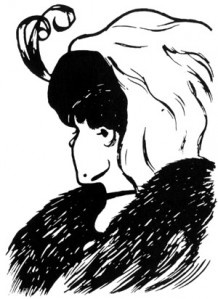
There’s a popular quote: “We do not see things as they are. We see things as we are.”— attributed to various sources, including the Talmud.  What Rabbi Nachmani really said in Talmud Tractate Berakhot (55b.) is above. But if what we see in our dreams is suggested by our thoughts, might not what we see, or choose not to see in our so called waking states also be influenced by what and who we are?

99782d4ce95c23e0b32b4c02dd19d9f7

The famous image above shows the profile of an old woman, or a young woman, depending how you look at it. Which one do you see? Can you see both? How we look at things depends on our life history, our culture, and our deep  belief systems called mental models. And when we have a deeply seated mental model, we tend to see life through that lens.

Imagine you see a sign that says, “Fine for Parking”. If you saw the world as a warm friendly place, you might park there, thinking that it was very thoughtful for someone to mark that parking space for you. If you were a more fearful person, you might avoid parking there, lest you get a ticket! Our worldview influences what we see and the meaning we make from it.

So it goes. What we tend to see outside ourselves reflects what is inside ourselves. And mere data has little effect on our mental models- we see what we see, and we won’t let mere facts get in the way. So we love one candidate and despise another, and cannot understand how our neighbor can vote for the other side. Seeing may be believing, but more often believing is seeing. We tend not to see things the way they are- we see them as we are.

How can you look at something with fresh eyes today, and challenge your own assumptions?

Samuel ben Nahmani  was a rabbi of the Talmud who lived in Israel and Babylon from the beginning of the 3rd century until the beginning of the 4th century. 

Joe Laur is a father, husband, artist, builder, naturalist, consultant, and EcoKosher mashgiach. He lives with his wife Sara in western Massachusetts, where he serves as head groundskeeper and resident singer songwriter. Send him your favorite teaching quote for commentary. He can be reached at joe.laur@joelaur.com.

Recent Comments

Tim Laur's avatarTim Laur on The Danger of Being Certa…
joelaur's avatarjoelaur on The Danger of Being Certa…
Tim Laur's avatarTim Laur on The Danger of Being Certa…
AJ's avatarAJ on The Danger of Being Certa…
Elisheva's avatarElisheva on The Bridge Over Fear

Author

  • joelaur's avatar joelaur
    • What We Don’t Know CAN Hurt Us!
    • The Danger of Being Certain
    • The Soul’s Long Journey
    • Acting Locally and Cosmically
    • The Fullness of the Earth
    • The Enemy is Fear
    • Running Against The Wind
    • Friendship as Food
    • No Place Like Home
    • Not The End Of The World

Blog at WordPress.com.

  • Subscribe Subscribed
    • Today's Rabbi
    • Already have a WordPress.com account? Log in now.
    • Today's Rabbi
    • Subscribe Subscribed
    • Sign up
    • Log in
    • Report this content
    • View site in Reader
    • Manage subscriptions
    • Collapse this bar
 

Loading Comments...