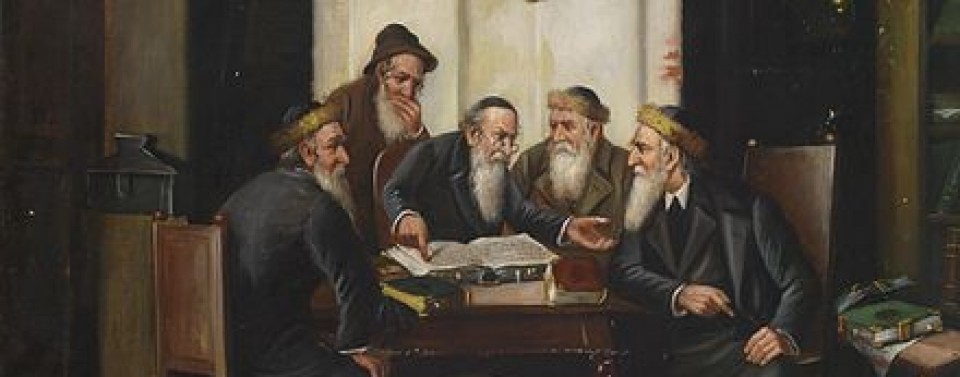
• About Today’s Rabbi

Today's Rabbi

~ …for you, a little wisdom!

Today's Rabbi

Tag Archives: Joe Laur

Myths Truer Than Facts

11 Friday Mar 2016

Posted by joelaur in Contemporary Sages, Uncategorized

≈ Leave a comment

Tags

Joe Laur, John Dominic Crossan, myth, todays rabbi, truth, wisdom

“My point, once again, is not that those ancient people told literal stories and we are now smart enough to take them symbolically, but that they told them symbolically and we are now dumb enough to take them literally.”

–John Dominic Crossan

chinese-675119_1280

“Aw, that’s just a myth!” People often exclaim something along those lines when they want to debunk a story that’s being touted as true. The dictionary defines myth as “1. a traditional story, especially one concerning the early history of a people or explaining some natural or social phenomenon, and typically involving supernatural beings or events; 2. a widely held but false belief or idea.” So myths are linked to traditions of peoples, and are also held to be “false”, i.e. not factual.

But are myths really false? Many people consider our great spiritual texts; like the Torah, the Bible, the Koran, the Vedas, Upanishads and the Bhagavad Gita, to be taken literally as the Word of G!D. Others consider them nothing more than fairy tales, comforting myths. But beyond these opposite poles is another way.

I propose that myths are sagas that contain those great truths too large to be contained by mere facts or history. Deeply resonant teachings, stories that build meaning, moral lessons, too powerful, universal and True in the most profound sense, to be limited to any one place or time. So when people ask me if I believe the Bible is true, I tell them, “Yes, I think it’s profoundly true. But I never take it literally.”

Any text that is referred to as the Living Word of the Divine could never be limited to one interpretation, one place, one time. That’s what makes it alive- continuous growth, change, and adaptation to the current environment. One story from Sinai is that the Voice of the One spoke to all the people assembled as individuals, and all heard and understood the teachings in their own way that was most meaningful and best for them. It’s not one size fits all. As one of my mentors used to say, “Stay close to those seeing the truth. And far away for anyone who’s found it!”

What profound truths can you discover in your spiritual myths today?

~~~~~~~~~~~~~~~~~~~~~~~~~~~~~~~~~~~~~~~~~~~~~~~~

John Dominic Crossan (born February 17, 1934) is an Irish-American New Testament scholar, historian of early Christianity, and former Catholic priest who has produced both scholarly and popular works. His research has focused on the historical Jesus, on the anthropology of the Ancient Mediterranean and New Testament worlds and on the application of postmodern hermeneutical approaches to the Bible.

Joe Laur is a father, husband, naturalist, executive, consultant, and a lowly rabbinic student. He can be reached at joe.laur@godsdog.net.

Living With Doubt

10 Thursday Mar 2016

Posted by joelaur in Contemporary Sages, Uncategorized

≈ Leave a comment

Tags

Joe Laur, Rabbi Arthur Hertzberg, self doubt, todays rabbi, uncertainty

“How can a rabbi not live with doubt? The Bible itself is a book of doubt…The Bible is never about certainty. And a rabbi who has no doubt is not a rabbi.”

-Rabbi Arthur Hertzberg

solemn-863667_1920

“Don’t be so sure of yourself!” My father used to say these words to me often as a teenager. After all, I knew everything when I was 16! As the years went on, my surety led me to many successes, but also some disastrous failures, of marriages, jobs, relationships. I began to doubt. Gradually, a chastened, wiser, older man stood in the place of an arrogant young  one. I began to appreciate the healthy voice of doubt.

Not that we should doubt ourselves at every turn. Trusting our intuition and instincts is very useful in many situations. But to never doubt is as foolish as to lack all certainty. The aboriginal people of Australia have been doing their rituals and customs for tens of thousands of years. But they continually ask: “Are we headed in the right direction?” They know that what worked yesterday may not work tomorrow, and the world is always changing, the sand ever shifting beneath  our feet.

As Carl Jung taught, “..what was great in the morning will be little at evening, and what in the morning was true, at evening will have become a lie.” We need to constantly adjust our horizons as we walk our path. A healthy dose of self doubt can help to keep us from stumbling too badly.

What certainty within your self needs a healthy challenge today?

~~~~~~~~~~~~~~~~~~~~~~~~~~~~~~~~~~~~~~~~~~~~~~~~~~~~~~~~~~~~

Arthur Hertzberg (June 9, 1921 – April 17, 2006) was a Conservative rabbi and prominent Jewish-American scholar and activist.

Joe Laur is a father, husband, naturalist, executive, consultant, and a lowly rabbinic student. He can be reached at joe.laur@godsdog.net.

Kindness Never Dies

09 Wednesday Mar 2016

Posted by joelaur in Contemporary Sages, Uncategorized

≈ Leave a comment

Tags

acts of kindness, cruelty, Joe Laur, karma, kindness, Rabbi Jonathan Sacks, todays rabbi


“Acts of kindness never die. They linger in the memory, giving lift to other acts in return.”

-Rabbi Jonathan Sacks

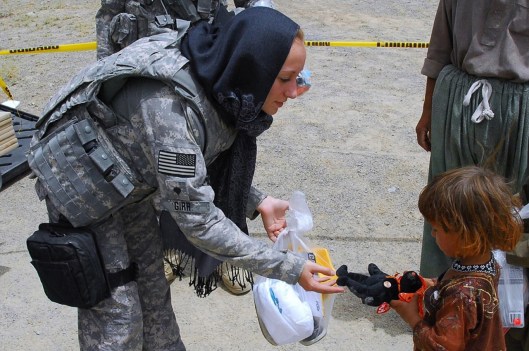
soldier-870372_1280

Like the film Pay It Forward, acts of kindness set off on a life of their own. The teaching is that our bad deeds cause harm for 3 or 4 generations, but goodness persists for thousands of generations. Like a ripple in a pond spreading out in all directions, our acts of kindness, big and small, have ripple effects that may reach beyond our knowing.

Rumi teaches: “If you open your loving to G!D’s Loving, you are helping people you don’t know and have never met.”  The kindness shown to me today may prompt me to offer kindness to someone else, and they to another, and so forth and so on, in an ever widening arc, a positive reinforcing cycle.

So yes, cruelty is powerful. But kindness is more powerful. The odds are a thousand to 4 I’m right on this one.

Where and how can you practice kindness today?

~~~~~~~~~~~~~~~~~~~~~~~~~~~~~~~~~~~~~~~~~~~~~~~~~~

Jonathan Henry Sacks, Baron Sacks, (born 8 March 1948) is a British rabbi, philosopher and scholar of Judaism. He served as the Chief Rabbi of the United Hebrew Congregations of the Commonwealth of  the United kingdom from 1991 to 2013.

Joe Laur is a father, husband, naturalist, executive, consultant, and a lowly rabbinic student. He can be reached at joe.laur@godsdog.net.
Strong Enough to Forgive

08 Tuesday Mar 2016

Posted by joelaur in Historic Voices, Uncategorized

≈ Leave a comment

Tags

forgiveness, Gandhi, Joe Laur, Mahatma Gandhi, strength, todays rabbi

“The weak can never forgive. Forgiveness is the attribute of the strong.”

-Mahatma Gandhi

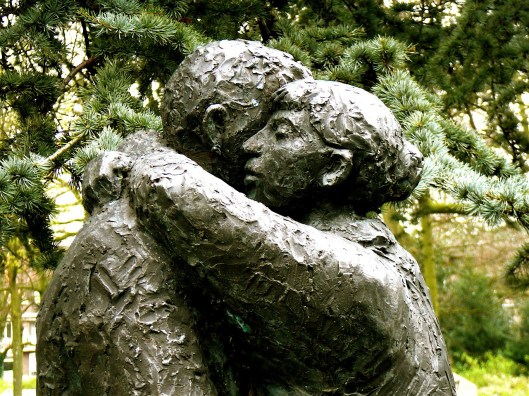
forgive-208824_1280

The Course in Miracles posits that forgiveness is essentially acknowledging that we have not been harmed. How can that be? Certainly the events that require forgiveness in the first place are ones where some harm has been done! I think what is meant is that when we are strong enough to recognize that we have survived a hurt, grown from a wound, maybe even become stronger in spite of, or because of it, we can then let go of the hatred or resentment toward the person who caused the hurt in the first place.

I”m not a fan of being naive, of “forgive and forget”. A dear friend of mine suggests that we “forgive and remember”; in other words, forgive our past hurts, let go of that burden, but realize that some people may hurt us again, and to extend trust to those we know won’t betray it. The world is not our mother.

But when we are strong, we realize that despite the slings and arrows we have been struck by, we are still standing, and we can extend the gift of forgiveness. Recognizing the blessing in our lives helps us to see through Rumi’s eyes: “What strikes the oyster doesn’t harm the pearl.” Gandhi’s entire life message was one of forgiving others their brutality and ignorance while relentlessly pursuing our own path. In so doing, he opened the eyes of his friends and foes alike to their mutual humanity. To walk that path requires enormous strength. And leads us to a place where few, if any, can truly harm us.

Where can you ask and grant forgiveness in your life today?

~~~~~~~~~~~~~~~~~~~~~~~~~~~~~~~~~~~~~~~~~~~~~~~~~~~~~~~~~~~

Mohandas Karamchand Gandhi ( 2 October 1869 – 30 January 1948) was the preeminent leader of the Indian independence movement in British-ruled India. Employing nonviolent civil disobedience, Gandhi led India to independence and inspired movements for civil rights and freedom across the world. The honorific Mahatma (Sanskrit: “high-souled”, “venerable”)—applied to him first in 1914 in South Africa,—is now used worldwide. He is also called Bapu (Gujarati: endearment for “father”or “papa”) in India. In common parlance in India he is often called Gandhiji. He is unofficially called the Father of the Nation.

Joe Laur is a father, husband, naturalist, executive, consultant, and a lowly rabbinic student. He can be reached at joe.laur@godsdog.net.

The Hate That Masks Pain

07 Monday Mar 2016

Posted by joelaur in Contemporary Sages, Uncategorized

≈ 1 Comment

Tags

denial, hatred, James Baldwin, Joe Laur, pain, todays rabbi

“I imagine one of the reasons people cling to their hates so stubbornly is because they sense, once hate is gone, they will be forced to deal with pain.”

-James A. Baldwin

broken-arm-1221297__340

In 1991, Rabbi Michael Weisser was the cantor and spiritual leader of the South Street Temple, in Lincoln, Nebraska. One morning, just after moving into a new house, the phone rang. A voice on the other end of the line spat the words “Jew boy” and told Weisser he would be sorry he had moved in. Anti-Semitic pamphlets followed, and an unsigned card reading, “The KKK is watching you, scum.”

Larry Trapp, the Grand Dragon of the White Knights of the Ku Klux Klan in Nebraska, lived in town, where he kept kept loaded guns, Hitler propaganda and his Klan robe. He was nearly blind and confined to a wheelchair, as he had lost his legs and eyesight to the ravages of diabetes. Rabbi Weisser suspected that it was he behind the hateful calls and literature.


He located his phone number, and began to call him weekly, at first leaving messages like: “Larry, there’s a lot of love out there. You’re not getting any of it. Don’t you want some?” “Larry, why do you love the Nazis so much? They’d have killed you first because you’re disabled.”

Finally, Trapp answered his phone in person. Rabbi Weisser spoke kind words. “I heard you’re disabled. I thought you might need a ride to the grocery store.”

One night Rabbi Weisser’s phone rang. It was Trapp, pleading, “I want to get out of what I’m doing and I don’t know how. ”

Rabbi Weisser and his wife drove to Mr. Trapp’s apartment that very night. They talked for hours, becoming friends in the process. They even took Trapp into their home as his health deteriorated further, and cared for him. Trapp renounced the Klan, began to make amends to those he had threatened and remarkably,  converted to Judaism in Rabbi Weisser’s synagogue. The former Klan leader died in Rabbi Weisser’s home within the year. The rabbi spoke at his funeral.

This remarkable story underscores James Baldwin’s contention that hate masks pain. None of us is born to hate. But all of us suffer pain in our lives. If we can deal with it cleanly and clearly, we can  learn and grow from it. When we look around for others to blame for our pain, we stay stuck in a cycle of hatred, denial, and more pain. Racism, antisemitism, Islamophobia, mysogyny, homophobia, and so on are rooted in pain, inadequacy, and fear. Allowing ourselves to feel the pain and work through it paves a path to freedom. Suppressing our pain only makes it worse when we finally feel it, and can cause great damage along the way.

What is your life’s pain teaching you today? How can you grow, not shrink, from it?

~~~~~~~~~~~~~~~~~~~~~~~~~~~~~~~~~~~~~~~~~~~~~~~~~~~~~~~

James Arthur Baldwin (August 2, 1924 – December 1, 1987) was an African American novelist, essayist, playwright, poet and social critic. His essays, as collected in Notes of a Native Son (1955), explore palpable yet unspoken intricacies of racial, sexual, and class distinctions in Western societies, most notably in mid-20th-century America, and their inevitable if unnameable tensions.

Joe Laur is a father, husband, naturalist, executive, consultant, and a lowly rabbinic student. He can be reached at joe.laur@godsdog.net.

Happiness as Wealth

06 Sunday Mar 2016

Posted by joelaur in Rabbinic Sages, Uncategorized

≈ Leave a comment

Tags

happiness, Joe Laur, sages, Shimon ben Zoma, Simeon ben, todays rabbi, wealth, Zoma

“Who is wealthy? He who is happy with his lot in life.”

-Simeon Ben Zoma

smiling-789372_1920

The Hebrew word “dayenu” means “enough for us”. It is a reminder that we have enough, do enough, make enough, are enough, in this and every moment. It’s enough, already!

Simon ben Zoma says that if we are happy with what we have, who we are, then we are truly wealthy. We all know people for whom nothing is ever enough. There’s always another dollar to earn, task to complete, need to fill, want to satisfy. But as the old saying goes, you can’t get enough of what you don’t really need! And though wants are many, needs are few. Most of us have most of our needs met most of the time, and quite a few of our wants as well.

Studies show that people get happier as basic needs are met, but when we reach a state of affluence, more than enough, happiness begins to taper off. We may even come down with  a case of “affluenza”, an ailment caused by too much stuff, and not enough soul.  How big a backpack do I need to move through life, anyway? It’s less than we guess.

In what ways are you most wealthy, and what matters most to you today?

~~~~~~~~~~~~~~~~~~~~~~~~~~~~~~~~~~~~~~~~~~~~~~~~~~~~~~~~~~~

Simeon ben Zoma, also known as Simon ben Zoma, Shimon ben Zoma or simply Ben Zoma was a Tanna of the first third of the 2nd century CE. His name is used without the title “Rabbi” because he died at a young age, remaining in the grade of “pupil” and never receiving rabbinical ordination.

Joe Laur is a father, husband, naturalist, executive, consultant, and a lowly rabbinic student. He can be reached at joe.laur@godsdog.net.

Expect Miracles

05 Saturday Mar 2016

Posted by joelaur in Historic Voices, Uncategorized

≈ Leave a comment

Tags

awe, Joe Laur, Maimonides, miracles, miraculous, todays rabbi, wonder

“A miracle does not prove what is impossible; rather it is an affirmation of what is possible.”

-Maimonides

rose-90991_1920.jpg

We often think of miracles as supernatural events, wrought by the Hand of G!D or one of Her prophets, spectacular and rare. But what if miracles were possible in every moment?

Take water for instance. If water  became denser as it froze into solid form, as do most materials, life would be impossible in cold climates. Lakes would freeze from the bottom up as the ice sank in the lighter liquid water. But because ice is less dense, it floats and insulates to some degree, preserving the liquid water and life beneath in lakes, rivers and streams.

Green cells take sunlight and minerals dissolved in water and create sugars and starches, on which virtually all other life depends. If no green cells, then no other life forms. Einstein remarked that in life, either everything is a miracle, or nothing is.

So miracles may be a function of expectations. If we expect life to be dull and ordinary most of the time, it surely will be in our dull, ordinary eyes. If we expect miraculous things, we will begin to see them all around us and within us. Each breath, when we stop and really notice it, is a miracle. Each heart beat, every ladybug or earthworm. Don’t even get me started on the cosmos! Miracles surround us, if we have the eyes to see.

How many miracles can you witness today?

~~~~~~~~~~~~~~~~~~~~~~~~~~~~~~~~~~~~~~~~~~~~~~~~~~~~~~~

Rabbi Moshe ben Maimon (acronymed Rambam  for “Rabbeinu Moshe Ben Maimon”, and Latinized Moses Maimonides), was a preeminent medieval Sephardic Jewish philosopher and astronomer,and  became one of the most prolific and influential Torah scholars and physicians of the Middle Ages. He worked as a rabbi, physician, and philosopher in Morocco and Egypt.

Joe Laur is a father, husband, naturalist, executive, consultant, and a lowly rabbinic student. He can be reached at joe.laur@godsdog.net.

Welcoming Hard Times

04 Friday Mar 2016

Posted by joelaur in Historic Voices, Uncategorized

≈ Leave a comment

Tags

adversity, Joe Laur, struggle, todays rabbi

“There is no education like adversity”

-Benjamin Disraeli

crawl-919224_1280

I’ve had a paragraph form the seminal book The Way of Transformation by Karlfried Graf von Durckheim hanging on my wall for over 30 years. It says, in essence, that when we fall on hard times we should not seek comfort, but rather friends who will help us to risk ourselves, move through adversity and come out stronger on the other side. He teaches that by exposing ourselves “over and over again to annihilation”, we can find that which is eternal and indestructible within us.

Disraeli would agree. Adversity, while  unwelcome, can give us lessons, skills and experience that makes us stronger and smarter. Sometimes just making it through to Friday is a victory! And a day of hard times is better than no day at all. We can bless it, wrestle with it, and learn from it.

What adversity is wrestling with you today, and  what can you learn from it?

~~~~~~~~~~~~~~~~~~~~~~~~~~~~~~~~~~~~~~~~~~~~~~~~~~~~~~~~~~~~

Benjamin Disraeli, 1st Earl of Beaconsfield, (21 December 1804 – 19 April 1881) was a British politician and writer, who twice served as Prime Minister.  He made the Conservatives the party most identified with the glory and power of the British Empire. He is the only British Prime Minister of Jewish birth.

Joe Laur is a father, husband, naturalist, executive, consultant, and a lowly rabbinic student. He can be reached at joe.laur@godsdog.net.

Killed for Love?

03 Thursday Mar 2016

Posted by joelaur in Mystic Voices, Uncategorized

≈ Leave a comment

Tags

divine love, Joe Laur, Love, rumi, surrender, todays rabbi

“In the slaughterhouse of love, they kill only the best, none of the weak or deformed. Don’t run away from this dying. Whoever’s not killed for love is dead meat.”

― Rumi

skeletal-601213_1920

At first glance, when we hear a phrase like “killed for love”, it conjures up a grisly image of a deranged stalker, or a marriage that has degenerated into a tragic murder/suicide. Rumi’s not going there with this theme. He’s talking about a different kind of dying, a dying of the small “s” self, of the ego, in order to open to something immensely greater.

In another of his quatrains, he writes this dialogue:

“I would love to kiss you”

” The price of kissing your life.”

Now my loving is running toward my life shouting, “What a bargain! Let’s buy it!”

Rumi suggests that if we don’t let ourselves be swept away, complete dissolved, “killed” for Divine Love ( and he might posit that all genuine love is Divine Love), we are nothing more than walking corpses, dead meat. The real zombie apocalypse lies in forgoing and forgetting love, in failure to surrender and letting love have its way with us.

My wife Sara and I discovered early in our courtship that we had both tried everything to make our previous relationships work except surrender to the other. We took a deep breath, and have been surrendering ever since. 23 years, a home, a business and two children later, we still struggle with it, and ultimately still surrender to love and each other. It’s scary sometimes, but it beats being dead meat. And we always are reborn into something larger.

In what ways can you surrender to love today?

~~~~~~~~~~~~~~~~~~~~~~~~~~~~~~~~~~~~~~~~~~~~~~~~~~~~~~~~~~~~~~

Jalal ad-Din Muhammed Rumi was a 13th-century Persian poet, jurist, Islamic scholar, theologian, and Sufimystic. Rumi’s influence transcends national borders and ethnic divisions; people of all faiths and nations have greatly appreciated his spiritual legacy for the past seven centuries. His poems have been widely translated into many of the world’s languages and transposed into various formats. Rumi has been described as the “most popular poet” and the “best selling poet” in the United States.

Joe Laur is a father, husband, naturalist, executive, consultant, and a lowly rabbinic student. He can be reached at joe.laur@godsdog.net.

Be More Like You!

02 Wednesday Mar 2016

Posted by joelaur in Historic Voices, Uncategorized

≈ Leave a comment

Tags

be yourself, Joe Laur, Reb Zusha, todays rabbi

“I worry that when I stand before Heavenly Judgement,  they’re not going to ask me ‘Why weren’t you more like Moses?’ or ‘Why weren’t you more like King David?’ But I’m afraid they will ask me ‘Zusha, why weren’t you more like Zusha?’ And then what will I say?!”

-Reb Zusha

woman-1160258_1920So often in our lives we try to emulate others, to be more like someone we look up to or admire, a sports hero, public figure, rock star or historical giant. Reb Zusha’s story suggests that that’s the wrong approach. While we can admire qualities in others, he teaches we should try to be ourselves. We are, each of us,  unique, irreplaceable, one of a kind. As Oscar Wilde famously said: “Be yourself, darling. Everyone else is already taken!”

In my early 20’s, I decided to stop trying to be cool, and to start being myself. And sometimes I still get to be cool, to boot! That path change has made all the difference in my life.

It may or not be that we are put here for a purpose. I choose to believe that we are, and further, that we can define the purpose we wish to serve. The process of serving our unique purpose is discovering who we are, what talents we have or can develop, and what the world needs most. Then if we live our lives at the intersection of those 3 domains; “This is me!” “Here’s what I can do!” and “What does the World need most?”,  we will certainly have impactful, meaningful lives. it starts with being the best “me” we can be.

How can you be deeply yourself today?

~~~~~~~~~~~~~~~~~~~~~~~~~~~~~~~~~~~~~~~~~~~~~~~~~~~~~~~~~~~~~~

Rabbi Meshulam Zusha of Hanipol (1718–1800),aka Reb Zusha, was an Orthodox rabbi and an early Hasidic luminary. He was one of the great Hassidic Rebbes of the third generation and member of the academy circle of the Maggid of Mezeritch.

Joe Laur is a father, husband, naturalist, executive, consultant, and a lowly rabbinic student. He can be reached at joe.laur@godsdog.net.

← Older posts
Newer posts →

Recent Comments

Tim Laur's avatarTim Laur on The Danger of Being Certa…
joelaur's avatarjoelaur on The Danger of Being Certa…
Tim Laur's avatarTim Laur on The Danger of Being Certa…
AJ's avatarAJ on The Danger of Being Certa…
Elisheva's avatarElisheva on The Bridge Over Fear

Author

  • joelaur's avatar joelaur
    • What We Don’t Know CAN Hurt Us!
    • The Danger of Being Certain
    • The Soul’s Long Journey
    • Acting Locally and Cosmically
    • The Fullness of the Earth
    • The Enemy is Fear
    • Running Against The Wind
    • Friendship as Food
    • No Place Like Home
    • Not The End Of The World

Blog at WordPress.com.

  • Subscribe Subscribed
    • Today's Rabbi
    • Already have a WordPress.com account? Log in now.
    • Today's Rabbi
    • Subscribe Subscribed
    • Sign up
    • Log in
    • Report this content
    • View site in Reader
    • Manage subscriptions
    • Collapse this bar
 

Loading Comments...