“The weak can never forgive. Forgiveness is the attribute of the strong.”
-Mahatma Gandhi
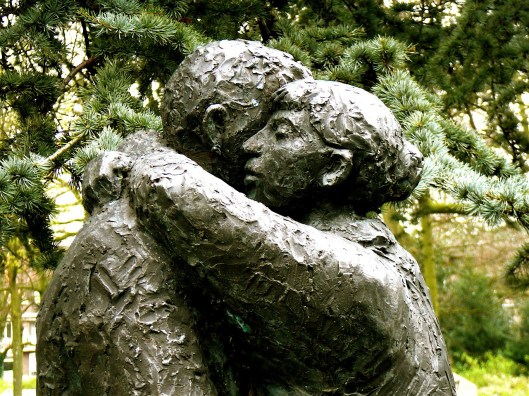
The Course in Miracles posits that forgiveness is essentially acknowledging that we have not been harmed. How can that be? Certainly the events that require forgiveness in the first place are ones where some harm has been done! I think what is meant is that when we are strong enough to recognize that we have survived a hurt, grown from a wound, maybe even become stronger in spite of, or because of it, we can then let go of the hatred or resentment toward the person who caused the hurt in the first place.
I”m not a fan of being naive, of “forgive and forget”. A dear friend of mine suggests that we “forgive and remember”; in other words, forgive our past hurts, let go of that burden, but realize that some people may hurt us again, and to extend trust to those we know won’t betray it. The world is not our mother.
But when we are strong, we realize that despite the slings and arrows we have been struck by, we are still standing, and we can extend the gift of forgiveness. Recognizing the blessing in our lives helps us to see through Rumi’s eyes: “What strikes the oyster doesn’t harm the pearl.” Gandhi’s entire life message was one of forgiving others their brutality and ignorance while relentlessly pursuing our own path. In so doing, he opened the eyes of his friends and foes alike to their mutual humanity. To walk that path requires enormous strength. And leads us to a place where few, if any, can truly harm us.
Where can you ask and grant forgiveness in your life today?
~~~~~~~~~~~~~~~~~~~~~~~~~~~~~~~~~~~~~~~~~~~~~~~~~~~~~~~~~~~
Mohandas Karamchand Gandhi ( 2 October 1869 – 30 January 1948) was the preeminent leader of the Indian independence movement in British-ruled India. Employing nonviolent civil disobedience, Gandhi led India to independence and inspired movements for civil rights and freedom across the world. The honorific Mahatma (Sanskrit: “high-souled”, “venerable”)—applied to him first in 1914 in South Africa,—is now used worldwide. He is also called Bapu (Gujarati: endearment for “father”or “papa”) in India. In common parlance in India he is often called Gandhiji. He is unofficially called the Father of the Nation.
Joe Laur is a father, husband, naturalist, executive, consultant, and a lowly rabbinic student. He can be reached at joe.laur@godsdog.net.
 Today's Rabbi