• About Today’s Rabbi

Today's Rabbi

~ …for you, a little wisdom!

Today's Rabbi

Category Archives: Rabbinic Sages

Hang Out With Wise Guys

27 Saturday Feb 2016

Posted by joelaur in Rabbinic Sages, Uncategorized

≈ Leave a comment

Tags

Joe Laur, Rabbi Yose ben Yoezer, talmud, talmudic wisdom, todays rabbi, wisdom

Let your home be a meeting place for the wise; dust yourself in the soil of their feet, and drink thirstily of their words.

-Rabbi Yose ben Yoezer

animal-483860_1280

A friend of mine, the poet Robert Bly, often talks about great writers emerging in groups, not singly. The implication is that by hanging out with other writers, they spark and inform each other, and produce better work than if they were working alone.

Now Im not sure if this is always the case for writers, but I know that one of the best ways to gain wisdom is to hang out with wise people. Rabbi Yose ben Yoezer urges us to make our home their meeting place, to roll in the dirt of their feet, and chug-a-lug their words! In other worlds, immerse ourselves in them. Who knows, maybe something will rub off!

The Hebrew word for wisdom, chochmah, is said to be a combination of the words for potential and being. The Potential to Be. If we are wise, we can see and realize our potential. If we are not, we will stay stuck in what we have always been. Maybe this is why we need to hang out with wise folks- to see their potential, and hopefully, let them see ours, even when we can’t see it ourselves.

Who brings wisdom into your life? Who sees your potential?

~~~~~~~~~~~~~~~~~~~~~~~~~~~~~~~~~~~~~~~~~~~~~~~~~~~~~~~

Yose ben Yoezer (circa 164 BCE) was a rabbi of the early Maccabean period, possibly a disciple of Antigonus of Soko and member of the ascetic group known as the Hasidæans, though neither is certain. He belonged to a priestly family.

Joe Laur is a father, husband, naturalist, executive, consultant, and a lowly rabbinic student. He can be reached at joe.laur@godsdog.net.

Gossip As Bad As Murder?

23 Tuesday Feb 2016

Posted by joelaur in Rabbinic Sages, Uncategorized

≈ Leave a comment

Tags

gossip, Joe Laur, lashon hara, slander, talmudic wisdom, todays rabbi

“For these things a person suffers in this world and loses their place in the world to come: idolatry, adultery, and murder; and evil tongue is equal to them all.”

-(Talmud Yerushalmi Peah 1:1 )

feather-on-the-grass.jpg

“It’s just words!”  How many times have we heard, or used that phrase? Meaning, it doesn’t matter. Sticks and stones can break my bones, but words will never hurt me. Or can they?

The rabbis of the Talmud considered telling harmful tales about someones failings, i.e. gossip, as a transgression equal to a combination of idolatry, sexual mayhem, and murder. Really? Gossip seems like a such a little sin, dishing a little dirt on someone else’s life. Not admirable, but as serious as those biggies together? This is not lies and slander, which is covered elsewhere. This is sharing things about someone that while negative, are true.

There’s always a story. In this one, a man went about the community telling tales about the rabbi’s failings. Later, he began to feel remorse. He went to the rabbi and begged his forgiveness, asking what he could do to make it right. The rabbi told the man, “Take a feather pillow, open it on the hill in town, and scatter the feathers to the 4 winds.” The man as instructed. When he asked the rabbi if he was forgiven, the rabbi said, “First, go and gather the feathers back up again.” The man protested that his was impossible, the feathers were scattered to the whole world. “So is it with your words”, the rabbi spoke,  “you can no more undo the damage of your words than you can recollect the feathers.”

Just words? Words brought the world into being in the Creation stories! Reputations have been ruined, people have committed suicide or killed others because of spoken words that were better kept unspoken. Someone’s story belongs to them, not us. We can use our words to create justice or injustice in the world. May ALL of our words be just words.

How can you use your words to create justice?

The Jerusalem Talmud (Talmud Yerushalmi), also known as the Palestinian Talmud or Talmuda de-Eretz Yisrael (Talmud of the Land of Israel), is a collection of Rabbinic notes on the 2nd-century Jewish oral tradition known as the Mishnah.  The Jerusalem Talmud was compiled in the Land of Israel during the 4th-5th centuries CE, then divided between the Byzantine provinces of Palaestina Prima and Palaestina Secunda. The Jerusalem Talmud predates its counterpart, the Babylonian Talmud (also known as the Talmud Bavli), by about 200 years and is written in both Hebrew and Jewish Palestinian Aramaic.

Joe Laur is a father, husband, artist, builder, naturalist, consultant, and EcoKosher mashgiach. He lives with his wife Sara in western Massachusetts, where he serves as head groundskeeper and resident singer songwriter. Send him your favorite teaching quote for commentary. He can be reached at joe.laur@joelaur.com.

Plant Your Tree Before Greeting the Messiah!

19 Friday Feb 2016

Posted by joelaur in Rabbinic Sages, Uncategorized

≈ Leave a comment

Tags

Joe Laur, Messiah, tikkun olam, todays rabbi, Yohanan ben Zakkai

“If you have a sapling in your hand, and someone should say to you that the Messiah has come, stay and complete the planting, and then go to greet the Messiah.”

–Rabbi Yohanan ben Zakkai (Avot de Rabbi Nathan, 31b).

a-girl-scout-volunteer-shows-her-pride-in-planting-this-tree-725x483

All of us, in some way, at some time in our life, have been waiting for the Messiah to come. Whether it’s a political candidate we hope is The One, or our True Love to arrive and take us to the Promised Land, or the right job, guru, advisor, boss, buddy to show up, we have all been “Waiting for Godot” in some way, shape, or form.

Rabbi Yohanan’s words may come as a shock then. Plant the tree and then greet the Messiah? The one we’ve been waiting for our whole lives? How can that be right?

First, Reb Yohanan’s words are about hearing that the Messiah has arrived. We hear many things every day that just aren’t so. Why leave our “tree” unattended, our task unfinished   while we run after every rumor?  Secondly, if we are engaged in an important task, “planting a tree”; involved in restorative, renewing work, shouldn’t we follow it through? If it really is the Messiah arriving, isn’t this what they would want anyway, to pursue our unique mission and purpose? If it really is the Messiah, they will wait for us to finish the  Task! And third, once we have “planted our tree”, discharged our sacred work, we can turn with full mind, body, and soul to Greet the One without distraction.

What if our planting that particular “tree” is the final task that actually brings “the Messiah”? What if the “Messiah”  is everyone we meet, and we can greet each other as such. And isn’t it fitting to welcome the “Messiah” in each other into a verdant garden full of “trees”?

What tree can you plant today to create the garden worthy of the Messiah?

~~~~~~~~~~~~~~~~~~~~~~~~~~~~~~~~~~~~~~~~~~~~~~~~~~~~~~~~~~~~~~~~

Yohanan ben Zakkai (30 BCE – 90 CE),also known as Johanan B. Zakkai, or in short Ribaz, was one of the tannaim, an important Jewish sage in the era of the Second Temple, and a primary contributor to the core text of Rabbinical Judaism, the Mishnah. He is widely regarded as one of the most important Jewish figures of his time.

Joe Laur is a father, husband, naturalist, executive, consultant, and a lowly rabbinic student. He can be reached at joe.laur@godsdog.net.

One Key To Wisdom

18 Thursday Feb 2016

Posted by joelaur in Rabbinic Sages, Uncategorized

≈ Leave a comment

Tags

community, Joe Laur, learning, todays rabbi, wisdom


“Who is wise? The one who learns from everyone”

-Shimon ben Zoma

grandfather-and-grandchild-1365226773XdV

Today’s post is as sweet and simple as the maple syrup I’ll soon be making from the trees on my land.  Opportunities to learn are all around us, in nature, in our neighbors, in ourselves. There is a Native American story about two lost boys who discover a rock in the forest that tells them stories. They gather all the people to sit around the rock for days, hearing all the stories that there are in the world. No one person will remember them all, but everyone will  remember some of them, and if they share with each other, they will remember them all, collectively.

So it is with all learning. We can’t have it all within us, but by reaching out to people and creation around us, we can access the encyclopedia of the cosmos. We are all each other’s teachers and students, repositories of wisdom at just the right moment.

Who can you learn from today?

Simeon ben Zoma, also known as Simon ben Zoma, Shimon ben Zoma or simply Ben Zoma  was a Tanna of the first third of the 2nd century CE. His name is used without the title “Rabbi” because he died at a young age, remaining in the grade of “pupil” and never receiving rabbinical ordination.

Joe Laur is a father, husband, naturalist, executive consultant, and a lowly rabbinic student. He can be reached at joe.laur@godsdog.net.

Don’t be a Pious Fool!

15 Monday Feb 2016

Posted by joelaur in Rabbinic Sages, Uncategorized

≈ 1 Comment

Tags

charity, Joe Laur, social justice, talmud, talmudic wisdom, tikkun olam, todays rabbi

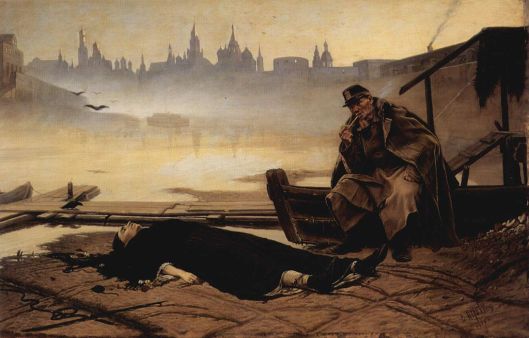
“Who is a person of piety and still a fool? Imagine a man who sees a woman drowning, but says,”It would not seem right for me, a religious man, to to touch a woman, and therefore I cannot pull her out.”

-Talmud

1024px-Wassilij_Grigorjewitsch_Perow_002

My father in law says there are two kinds of people in the world: those who say, “I’d love to but…”, and those who say, “What time and where?” In other words, those who show up and those who don’t.

The rabbis of the Talmud paint an extreme picture in the story above, but how often do we wring our hands or turn our gaze from situations we could act to correct? Our excuses are righteous and legion: too busy, have our own needs to look after, might get sued, probably a con, etc.

When a person stands on the side of the road  or walkway with a sign that says “Homeless- Please Help” or “Will Work for Food”, do we listen to the righteous, even pious voice that says; “Probably a drunk or addict, my money will just go for drugs or booze”, or ” I can’t help everybody, they need to rely on themselves”? Or do we focus on the person here, now, before us, and take the chance that we might get conned, but help them anyway in case there is real need?

In our home, we have begun the practice of buying gift cards at a local grocery chain for small amounts, $2-5 each. We buy 50 bucks worth, and keep them in the car and in our pockets, purse or wallet. Then we hand a card to anyone who holds up a sign or asks for spare change. “Here take this, you can get some food at this grocery.” No one has scowled back yet- most light up and thank us. How do we know for sure who is drowning and who is not? So we let ourselves be “suckers” and give a little to everyone. It doesn’t go to booze, and I know it does some good, because of the way I feel doing it.

Who is drowning around you? What lifesavers can you throw?

~~~~~~~~~~~~~~~~~~~~~~~~~~~~~~~~~~~~~~~~~~~~~~~~~~~~~~

The Talmud (Hebrew for “instruction, learning”) is a central text of Rabbinic Judaism.  The term “Talmud” normally refers to the collection of writings named specifically the Babylonian Talmud  although there is also an earlier collection known as the Jerusalem Talmud. The Talmud has two components: the Mishnah (c. 200 CE), a written compendium of Rabbinic Judaism’s Oral Tradition; and the Gemara (c. 500 CE), an elucidation of the Mishnah and related writings that often ventures onto other subjects and expounds broadly on the Hebrew Bible. The term “Talmud” may refer to either the Gemara alone, or the Mishnah and Gemara together.

The entire Talmud consists of 63 tractates, and in standard print is over 6,200 pages long. It is written in Tannaitic Hebrew and Aramaic, and contains the teachings and opinions of thousands of rabbis (dating from before the Christian Era through the fifth century CE) on a variety of subjects, including law,  ethics, philosophy, customs, history, lore and many other topics. The Talmud is the basis for all codes of Jewish law, and is widely quoted in rabbinic literature.

Joe Laur is a father, husband, naturalist, executive consultant, and a lowly rabbinic student. He can be reached at joe.laur@godsdog.net.
The Universe Wants You to Grow!

14 Sunday Feb 2016

Posted by joelaur in Rabbinic Sages, Uncategorized

≈ Leave a comment

Tags

Genesis, Genesis rabba, growth, Joe Laur, self care, todays rabbi, wisdom

“There is not a single blade of grass that has not its own star in heaven that strikes it and says “GROW!”

-Genesis Rabbah

stalks-of-grass-in-road

Growth is natural. It’s what living things do. It simply happens  whenever the conditions for growth are present, which is most of the time in most places on Earth.

We can think of ourselves as the gardeners of our lives, not task masters, shouting “Grow, dammit!” at ourselves; or judges, critiquing: “You’d be further along if you weren’t such a dope.” We all grow at our own pace, depending on genetics and circumstances, nature and nurture. What’s the main role of the gardener? Simply to tend to that which limits growth, such as shade, poor soil, drought, and and provide that which fosters it, such as water, nutrients, sunlight.

We can use this wisdom in our own lives, removing the poor soils of harsh judgement of ourselves, the drought of lousy self care, the shade of shame. We can provide ourselves with rich soils of people who love and respect us, the water of blessing from self and others, the nourishment of investing in our own well being. When that’s done, healthy growth is inevitable. In fact it’s the Way of the World.

What do you need to tend in your “garden” to grow deeper and higher today?

~~~~~~~~~~~~~~~~~~~~~~~~~~~~~~~~~~~~~~~~~~~~~~~~~~

Genesis Rabba  is a religious text from Judaism’s classical period, probably 4th or 5th  century C.E. It is a midrash comprising a collection of ancient rabbinical homiletical interpretations of the Book of Genesis.

Joe Laur is a father, husband, naturalist, executive consultant, and a lowly rabbinic student. He can be reached at joe.laur@godsdog.net.

Heaven Is Open To Tears

05 Friday Feb 2016

Posted by joelaur in Rabbinic Sages, Uncategorized

≈ Leave a comment

Tags

grief, grieving, prayer, Rabbi Eleazar, repentance, tears

“From the day the Temple was destroyed, the (Heavenly) gates of prayer have been closed…..But even though the gates of prayer are closed, the gates of tears are opened…”

-Rabbi Eleazar ben Azariah (Babylonian Talmud 32b)

images

There is a Talmudic story about a man, Eleazar ben Durdia (no relation to today’s quoted rabbi), who visited every prostitute he ever heard of. While in the throes of passion with a woman to whom he had paid a huge sum and crossed seven rivers to be with, she passed gas, and told him that just as her gas would not return, he could never repent enough to gain a place in the next world. He was mortified, and saw immediately how depraved his life had become. He retired to the nearby hills, where he cried to the heavens and earth,  mountains and hills, sun and moon, stars and constellations. None could help. He said, “It is upon me then”, and wept so grievously that his very soul departed his body. At that moment a voice for the heavens cried out, “Rabbi Eleazar ben Durdia has gained a place in the World-to-Come!”

In his heartfelt repentance, Eleazer ben Durdia had not only found spiritual redemption, but the title rabbi as well, as an example of complete repentance. While hopefully none of us have to go to his extremes, the lesson is that contrite tears can take us to where even heartfelt prayer cannot. Rumi reminds us that “The grief you cry out from draws you toward union. Your pure sadness that wants help is the secret cup.”  Our heartfelt grief, whether it is a desire to be healed, to seek help for another, or to return to our own best and highest way of being, can connect us to the Divine.

The Hebrew word for repentance, tshuvah, literally means return. To return to our true self, the path we want to be on, the direction we want our life to travel. Sometimes when we see how far we’ve strayed from our ideals, we need a good cry to release it all. A key outcome of expressed grief is great release. We may feel we’ve fallen too far to ever get back up again, to ever return home. The good news is, that heartfelt cry can get us a long way to where we long to be. When the gates of heaven, or even our own hearts,  are closed to prayer, they are still open to tears.

What within you cries for release, to return “home”?

~~~~~~~~~~~~~~~~~~~~~~~~~~~~~~~~~~~~~~~~

Eleazar ben Azariah was a 1st-century CE Jewish Mishnaic sage. He was a kohen and traced his pedigree for ten generations back to Ezra the Scribe.

Joe Laur is a father, husband, artist, builder, naturalist, consultant, and EcoKosher mashgiach. He lives with his wife Sara in western Massachusetts, where he serves as head groundskeeper and resident singer songwriter. Send him your favorite teaching quote for commentary. He can be reached at joe.laur@joelaur.com.

Seeing Things As They Are

27 Wednesday Jan 2016

Posted by joelaur in Rabbinic Sages, Uncategorized

≈ Leave a comment

Tags

mental models, perspectives, seeing is believing, talmud, todays rabbi

“A man is shown in a dream only what is suggested by his own thoughts…”

–R. Samuel b. Nahmani

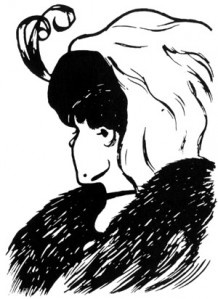
There’s a popular quote: “We do not see things as they are. We see things as we are.”— attributed to various sources, including the Talmud.  What Rabbi Nachmani really said in Talmud Tractate Berakhot (55b.) is above. But if what we see in our dreams is suggested by our thoughts, might not what we see, or choose not to see in our so called waking states also be influenced by what and who we are?

99782d4ce95c23e0b32b4c02dd19d9f7

The famous image above shows the profile of an old woman, or a young woman, depending how you look at it. Which one do you see? Can you see both? How we look at things depends on our life history, our culture, and our deep  belief systems called mental models. And when we have a deeply seated mental model, we tend to see life through that lens.

Imagine you see a sign that says, “Fine for Parking”. If you saw the world as a warm friendly place, you might park there, thinking that it was very thoughtful for someone to mark that parking space for you. If you were a more fearful person, you might avoid parking there, lest you get a ticket! Our worldview influences what we see and the meaning we make from it.

So it goes. What we tend to see outside ourselves reflects what is inside ourselves. And mere data has little effect on our mental models- we see what we see, and we won’t let mere facts get in the way. So we love one candidate and despise another, and cannot understand how our neighbor can vote for the other side. Seeing may be believing, but more often believing is seeing. We tend not to see things the way they are- we see them as we are.

How can you look at something with fresh eyes today, and challenge your own assumptions?

Samuel ben Nahmani  was a rabbi of the Talmud who lived in Israel and Babylon from the beginning of the 3rd century until the beginning of the 4th century. 

Joe Laur is a father, husband, artist, builder, naturalist, consultant, and EcoKosher mashgiach. He lives with his wife Sara in western Massachusetts, where he serves as head groundskeeper and resident singer songwriter. Send him your favorite teaching quote for commentary. He can be reached at joe.laur@joelaur.com.

Repairing the World

21 Thursday Jan 2016

Posted by joelaur in Rabbinic Sages, Uncategorized

≈ Leave a comment

Tags

Rabbi Tarfon, social justice, tikkun olam

“You are not obligated to complete the work, but neither are you free to desist from it…”                   –Rabbi Tarfon, Pirkei Avot 2:16

Rabbi Tarfon was a member of the third generation of the Mishnah sages, who lived in the period between the destruction of the Second Temple (70 CE) and the fall of Betar (135 CE).

The Creation mythology of Genesis reveals G!D spending 6 days creating the world, in an evolving process of proclamation, separation, development, and emergence. In organizational consult terms, continuous improvement. And then G!D took the seventh day off.

It is taught that not only should we take every seventh day, Shabbat, off ourselves, but we too, should labor the other 6 to continue the work of bringing forth an emerging world, doing our best to improve it. This process is known in Hebrew as Tikkun Olam– healing, repairing, restoring and renewing the world.

world-in-hands

What is that work for us today? For many it is pursuit of healing of bodies and souls, justice for the long, old, and weak, and conservation and renewal of the planet we inhabit. Just as Providence brings forth grapes, grain, and maples, and we make wine, bread, and syrup, the work of tikkun is seen as partnering with the Divine to evolve a more perfect world. Visiting the sick and imprisoned; freeing captives; protecting children; physical, emotional, and spiritual healing; rebuilding communities and lives, all are examples of tikkun olam.

And as Rabbi Tarfon so succinctly puts it, we do not have to finish the work ourselves. Whew! How many of us have burned out or worn ourselves to a nub trying to do it all? Great News! We don’t have to!

But neither may we sit on our hands, or wring them sympathetically , while standing by doing nothing. We are tasked. If we see something, we ought not just to say something, but to DO something. The apostle James famously wrote that faith without works is dead.

We don’t need to take the world on our shoulders, Atlas is doing a fine job of that. But we can each lift up our bit of it, and in so doing, become partners with The One in bringing forth a world we’d want to live in.

What catches your attention today? What are you being called to  repair, heal, restore, renew?

Joe Laur is a father, husband, artist, builder, naturalist, consultant, and EcoKosher mashgiach. He lives with his wife Sara in western Massachusetts, where he serves as head groundskeeper and resident singer songwriter. Send him your favorite teaching quote for commentary. He can be reached at joe.laur@joelaur.com.

Image

“Say Little and Do Much”

19 Tuesday Jan 2016

“Shammai would say, ‘Make your Torah fixed. Say little and do much. And receive every human with an expression of beautiful faces .'”

-Chapters of the Fathers; Chapter 1 Verse 15

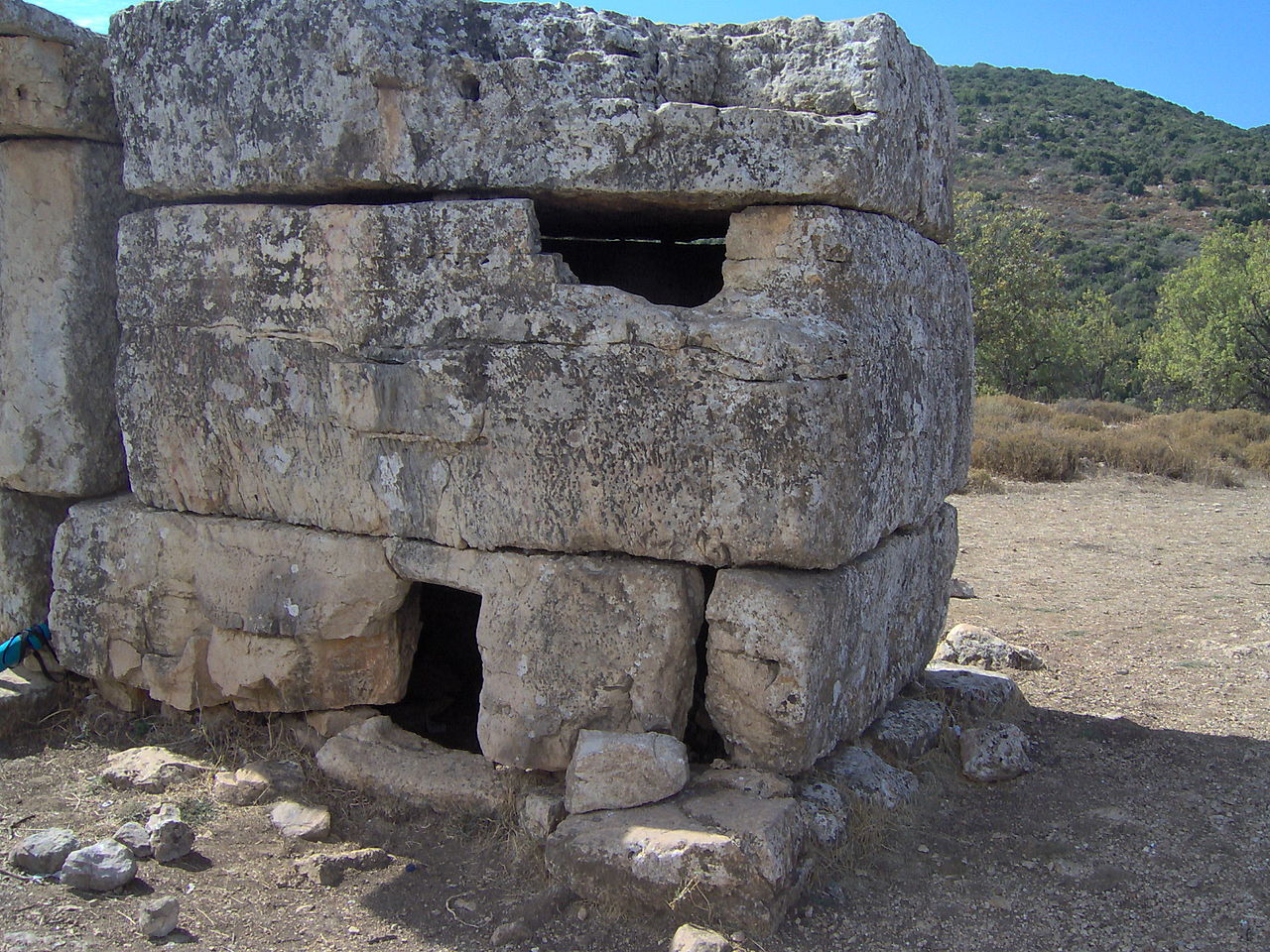
1280px-Shamai

“Tomb of Shammai” by Amoruso https://commons.wikimedia.org/wiki/File:Shamai.jpg#/media/File:Shamai.jpg

Shammai was an eminent Jewish scholar of the 1st century, a colleague of Hillel the Elder and a contemporary of Jesus of Nazareth, who, if he knew of him, he would have known by his Hebrew  name, Yeshua.(Joshua).

Shammai was a friendly, modest man personally but strict religiously. His school of teaching was overshadowed in Jewish  practice by his colleague and theological opponent Hillel. But this brief teaching by Shammai speaks volumes and is my favorite among the pithy quotes of the Sages.

“Make your Torah fixed”: In other words, make my spiritual study a fixture of my life, a daily practice, a regular feature of my day, like brushing my teeth or washing my face. Even a small discipline, done daily, like putting away a little each week for savings,  pays enormous long term dividends in my personal growth.

pushing_the_world

“Say little and do much”: Let my actions speak for me. Be modest in promises and big in fulfillment. Like the Nike slogan”Just Do It!’

“And receive every human with the expression of beautiful faces”:  If the eye is the window to the soul, as the saying goes, how much more so the whole face! Before someone can clearly hear us speak, they can see our face from a long ways off.  How do i want to “face” the  people in my life? Can I see the goodness- the G!Dness- in them, and let my own face reflect that back? The Persian poet Rumi chides his companion: “You have my face right here, and you gaze at flowers?!” Can I see the wonder, the miracle of every person I encounter? (Even the ones I don’t care for so much?)

What can I do today to support my practice, to let my actions speak louder than my words, and to greet everyone with the beauty we all carry?

4 Parismina - kids 3

Joe Laur is a father, husband, artist, builder, naturalist, consultant, and EcoKosher mashgiach. He lives with his wife Sara in western Massachusetts, where he serves as head groundskeeper and resident singer songwriter. Send him your favorite teaching quote for commentary. He can be reached at joe.laur@joelaur.com.

Posted by joelaur | Filed under Rabbinic Sages, Uncategorized

≈ Leave a comment

Newer posts →

Recent Comments

Tim Laur's avatarTim Laur on The Danger of Being Certa…
joelaur's avatarjoelaur on The Danger of Being Certa…
Tim Laur's avatarTim Laur on The Danger of Being Certa…
AJ's avatarAJ on The Danger of Being Certa…
Elisheva's avatarElisheva on The Bridge Over Fear

Author

  • joelaur's avatar joelaur
    • What We Don’t Know CAN Hurt Us!
    • The Danger of Being Certain
    • The Soul’s Long Journey
    • Acting Locally and Cosmically
    • The Fullness of the Earth
    • The Enemy is Fear
    • Running Against The Wind
    • Friendship as Food
    • No Place Like Home
    • Not The End Of The World

Blog at WordPress.com.

  • Subscribe Subscribed
    • Today's Rabbi
    • Already have a WordPress.com account? Log in now.
    • Today's Rabbi
    • Subscribe Subscribed
    • Sign up
    • Log in
    • Report this content
    • View site in Reader
    • Manage subscriptions
    • Collapse this bar
 

Loading Comments...